
































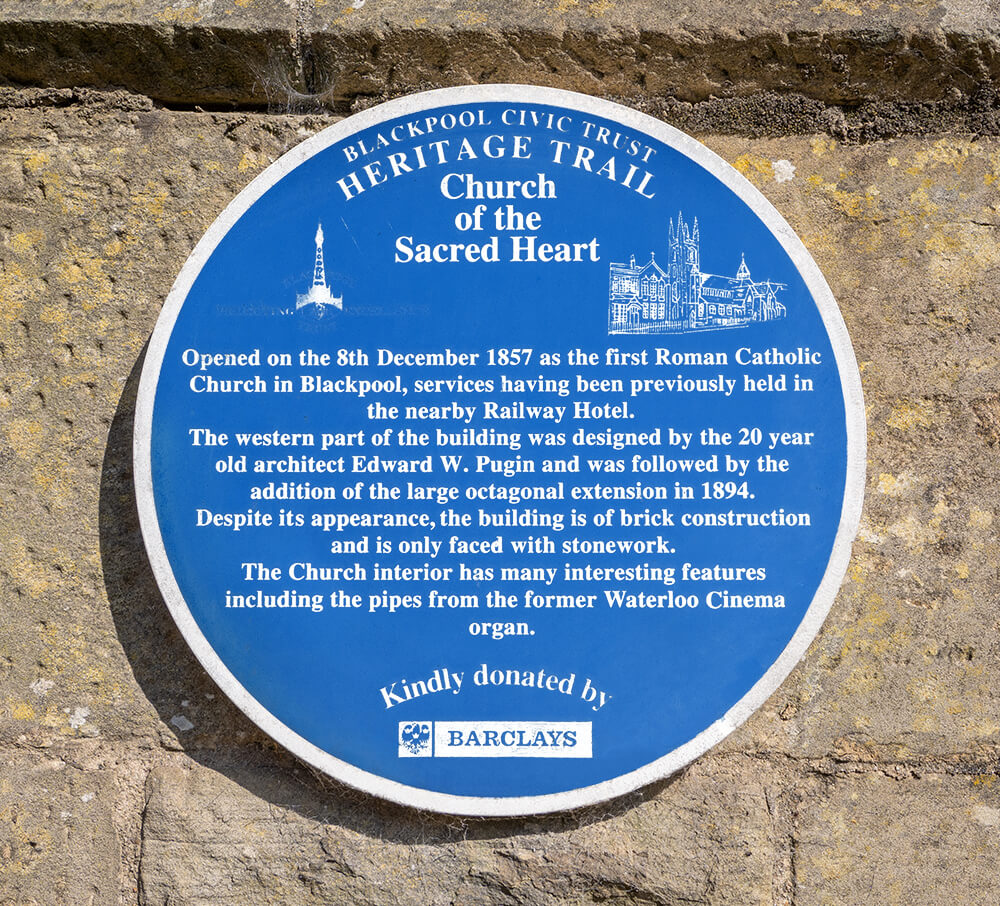
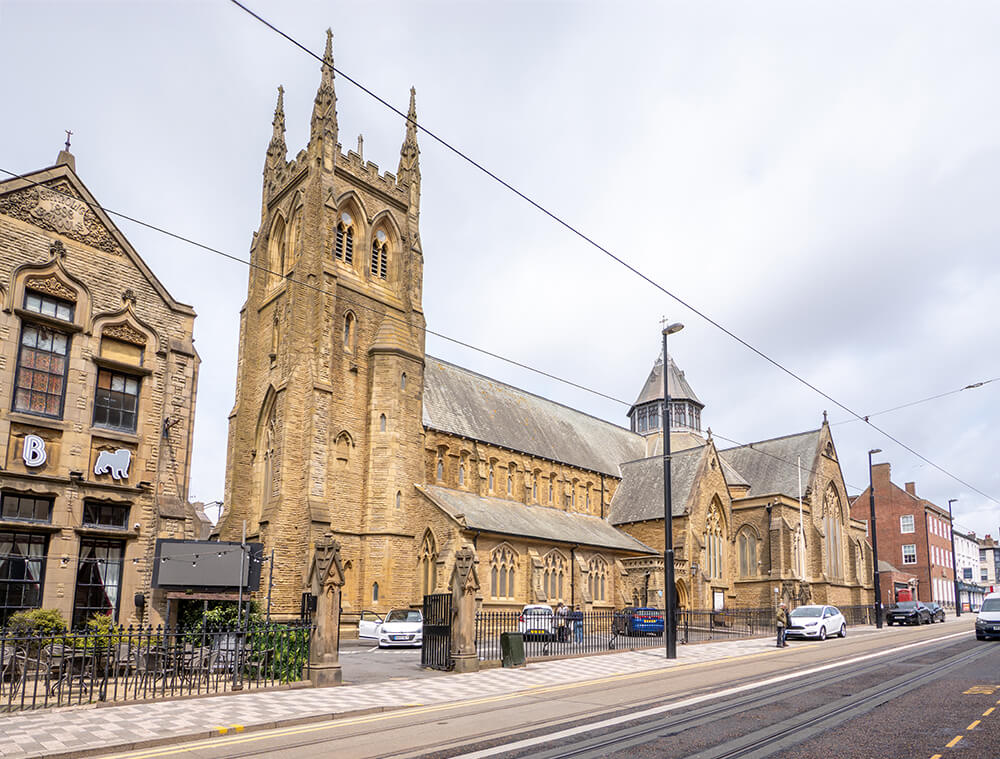
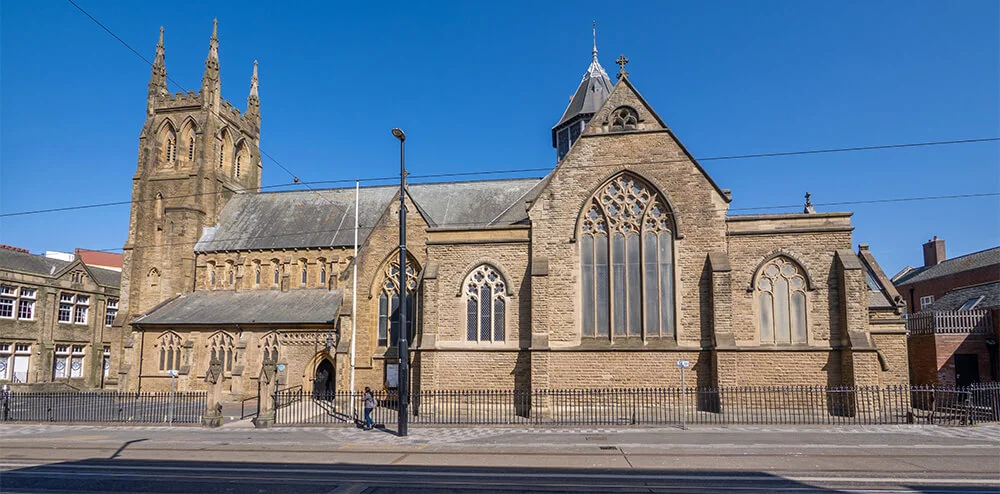
Sacred Heart Church stands as one of Blackpool’s most significant historic and architectural landmarks. Founded by the Society of Jesus, it was the town’s first Roman Catholic place of worship, reflecting both the growing Catholic population and the wider expansion of Victorian Blackpool. The church was built in 1857 to the design of Edward Welby Pugin, one of the foremost ecclesiastical architects of the nineteenth century and son of Augustus Welby Northmore Pugin, whose influence shaped the Gothic Revival movement in England. As the Catholic congregation increased, the building was enlarged to the east in 1894 by the firm of Pugin & Pugin, which continued the family’s distinctive architectural legacy. The extended structure preserved the integrity of Pugin’s original vision while enhancing both its capacity and ornamentation. On 20 October 1983, the church was recognised for its exceptional architectural and historical importance when it was designated a Grade II* listed building—a status reserved for structures of particular significance and national interest.
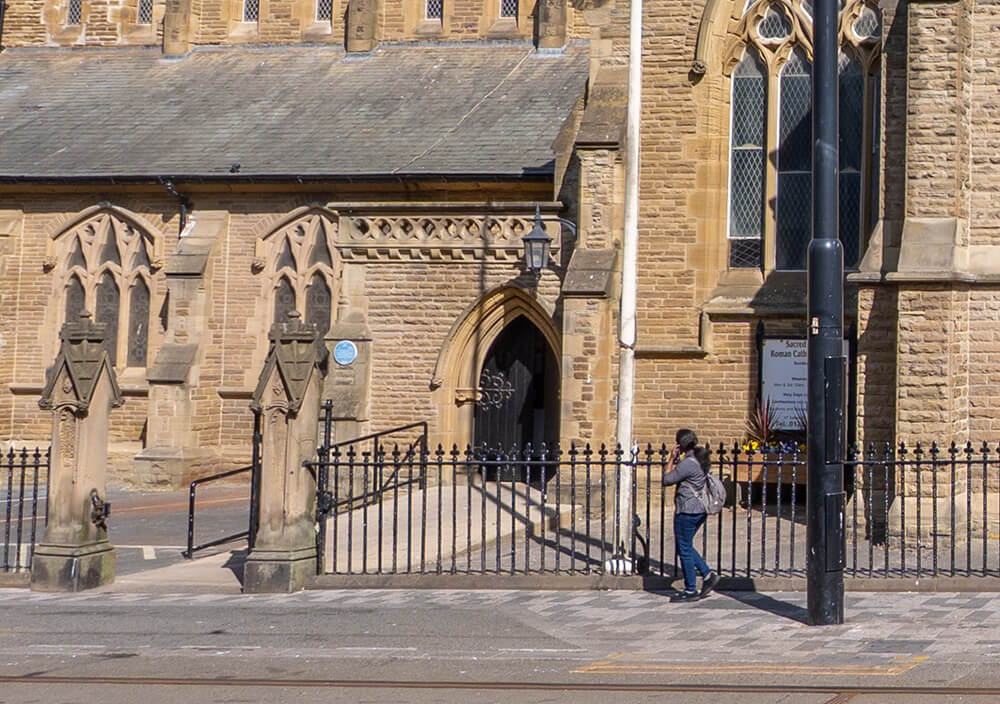
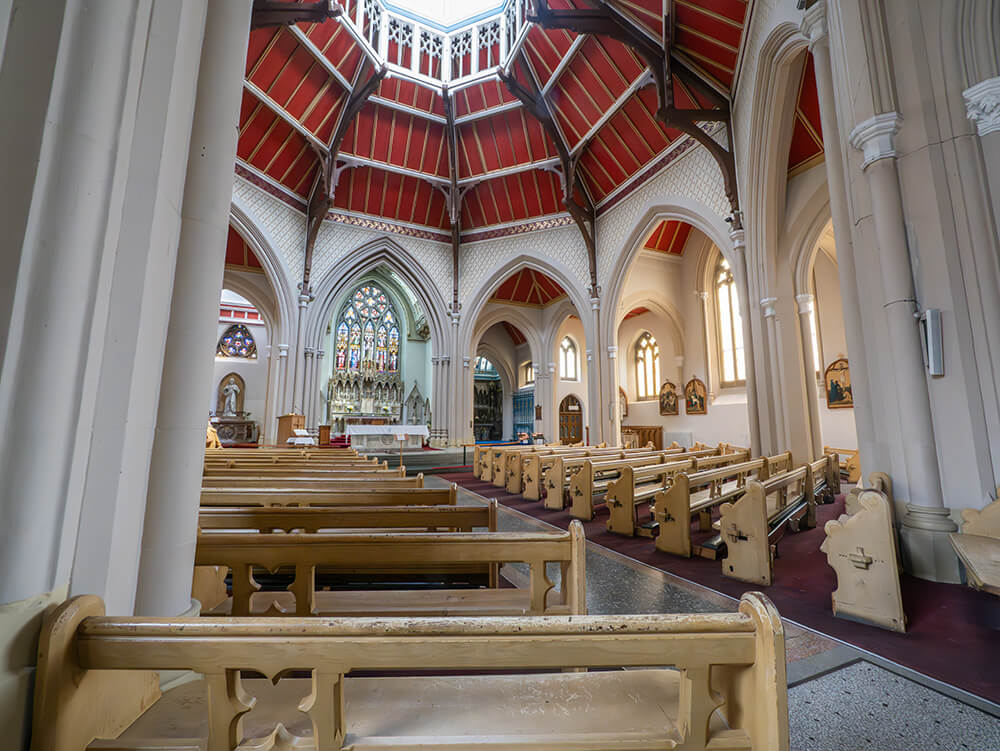
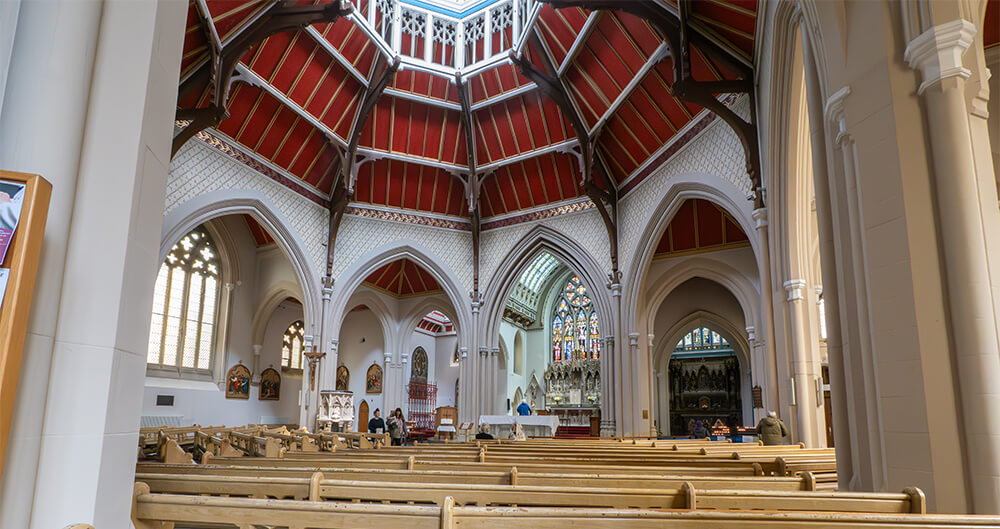
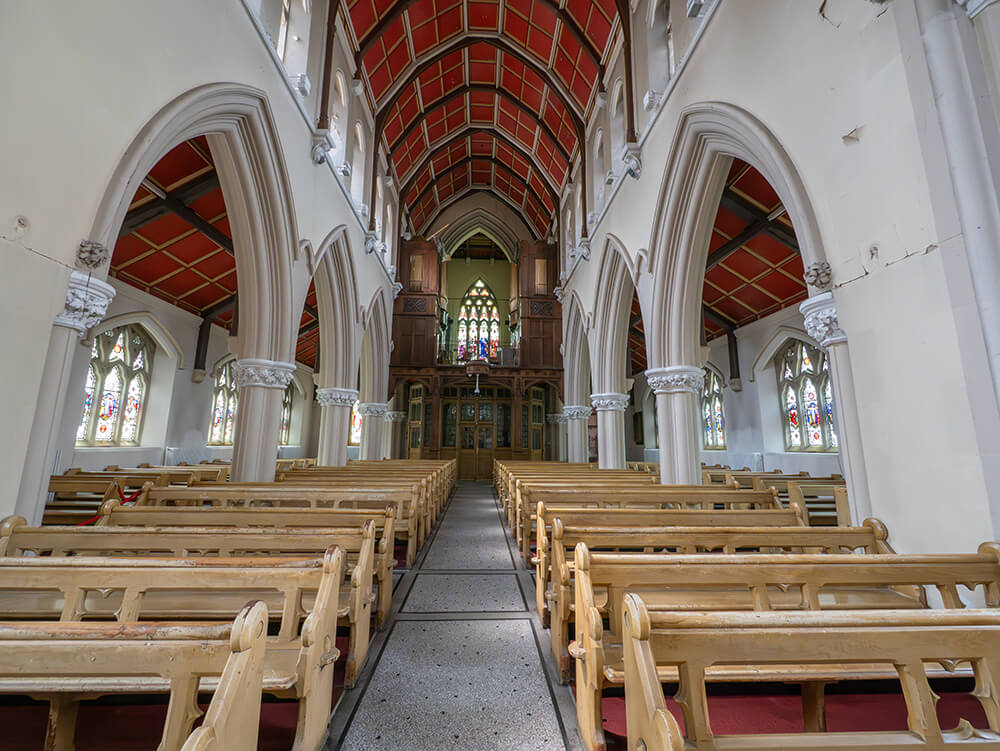
Since 2004 the church has been served by priests of the Roman Catholic Diocese of Lancaster, following the departure of the Jesuit community. The present parish priest is Canon Robert Dewhurst, under whose care the church continues to serve a vibrant local congregation. Architecturally, Sacred Heart is constructed of stone with slate roofs, executed in the English Gothic style that characterised much of Pugin’s ecclesiastical work. The plan comprises a four-bay nave leading to an octagonal crossing surrounded by aisles and transepts. Above the crossing rises a lead-clad pyramidal roof topped by an octagonal wooden lantern with tracery and a copper roof. The western tower is a dominant feature, built in four stages with angled buttresses, corner pinnacles and clerestory windows that admit ample light to the interior. The aisles have three-light windows, while the transepts contain four-light designs.
The stained glass of the nave was produced by Frances Barnett of Leith, whose work exemplifies the detailed craftsmanship of the Victorian Gothic period. The 1894 extension introduced larger windows with reticulated tracery, and the grand east window—believed to be by William Wailes—adds a further richness to the composition. Inside, the nave arcades rest on clustered marble piers capped with foliated capitals supporting moulded lancet arches. A two-bay gallery occupies the west end. The chancel is flanked by two Lady Chapels, and the furnishings reflect the craftsmanship of the late nineteenth century: a finely carved white marble octagonal pulpit rests upon red and black columns, symbolising both beauty and permanence.
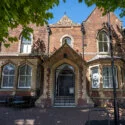
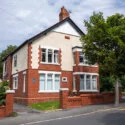
To the east of the church stands a Neo-Georgian presbytery constructed around 1950, complementing the main structure in form and proportion, while to the west lies a former school building dating from 1898. Unlike many churches of its period, Sacred Heart has no adjoining graveyard, reflecting its urban setting in the heart of the resort. For more than a century and a half, Sacred Heart Church has remained a centre of Catholic worship in Blackpool, admired for both its architectural elegance and its deep spiritual heritage. Its distinctive silhouette continues to rise above the surrounding streets, a lasting reminder of the artistry of the Pugin family and the enduring strength of the town’s religious and cultural identity.
Images by © Deeper Blue Marketing & Design Ltd


