





































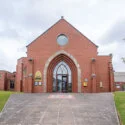

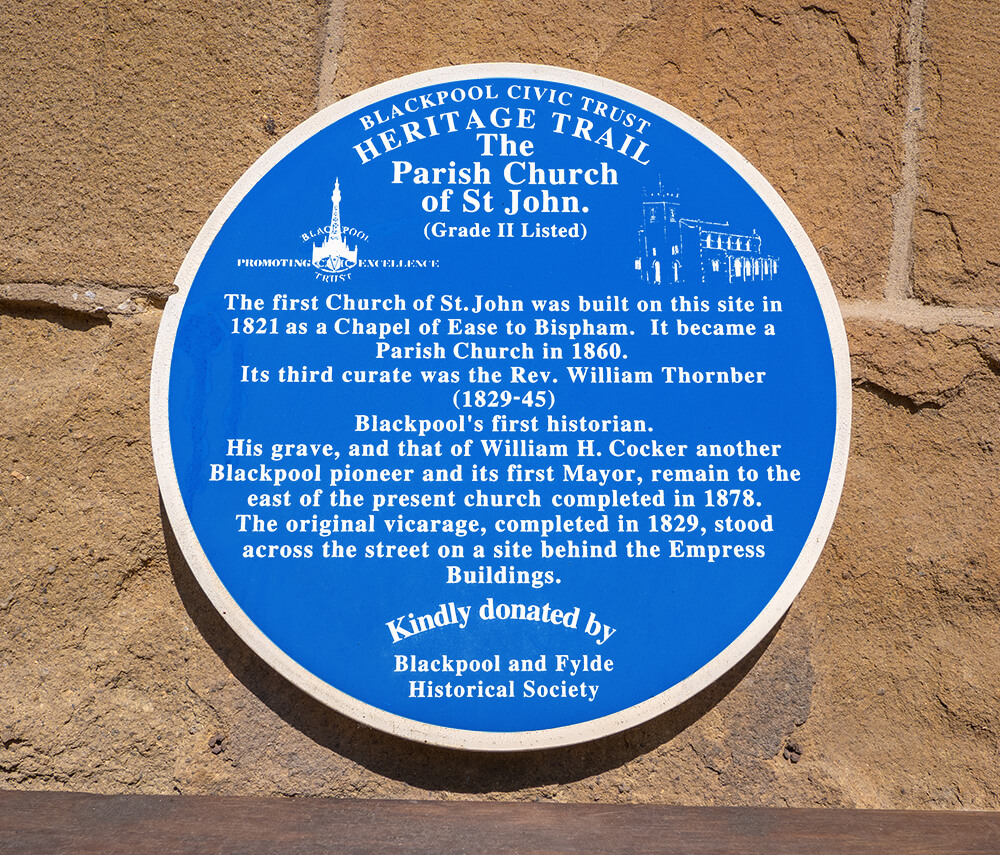
St John the Evangelist, the parish church of Blackpool, stands at the heart of the town as one of its most enduring ecclesiastical landmarks. The present building, completed in 1878, is a Grade II listed structure and serves as an active Anglican parish church within the Diocese of Blackburn, part of the ecclesiastical Province of York. It lies in the Archdeaconry of Lancaster and the Deanery of Blackpool, continuing a history of Christian worship in the town that stretches back over two centuries. Before the nineteenth century, Blackpool possessed no parish church of its own, and residents travelled to nearby Bispham for baptisms, marriages and burials at All Hallows Church. This arrangement changed in 1821 when the first St John’s Church was built on the present site. Dedicated to John the Evangelist, it was consecrated on 6 July 1821 by George Henry Law, Bishop of Chester. The modest brick structure was expanded several times—in 1832, 1847 and again in 1851, when a chancel was added—but as Blackpool grew into a major resort, the original building became inadequate for its expanding congregation.
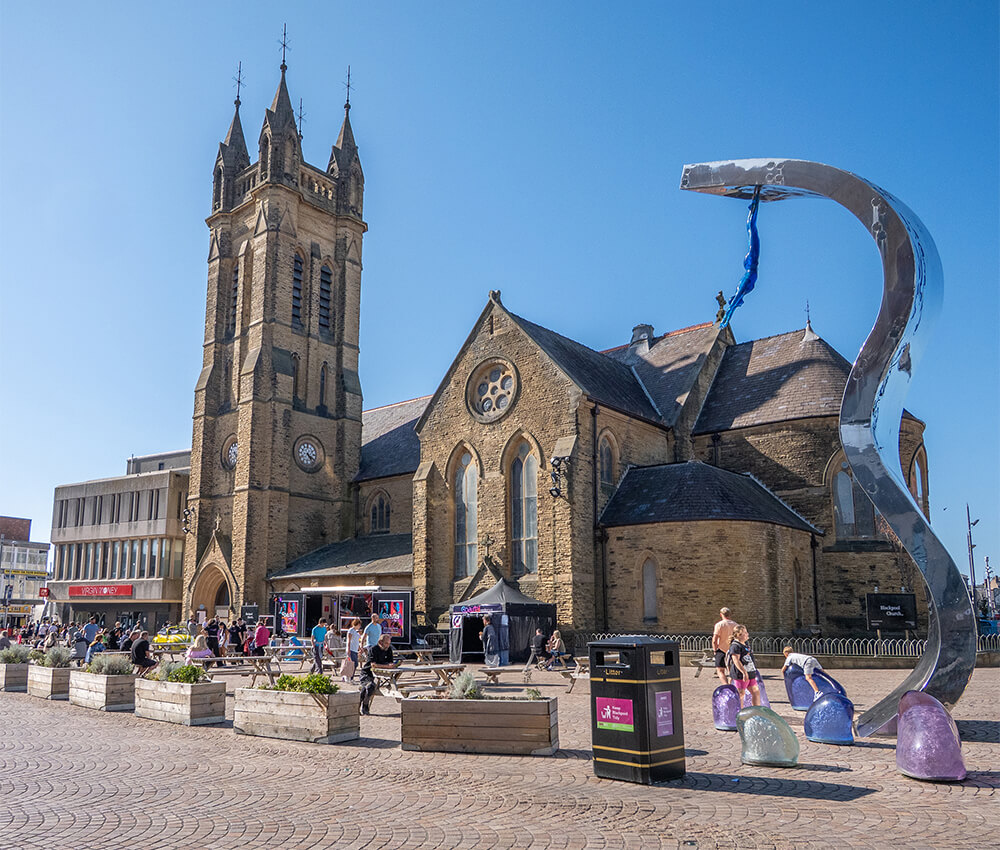
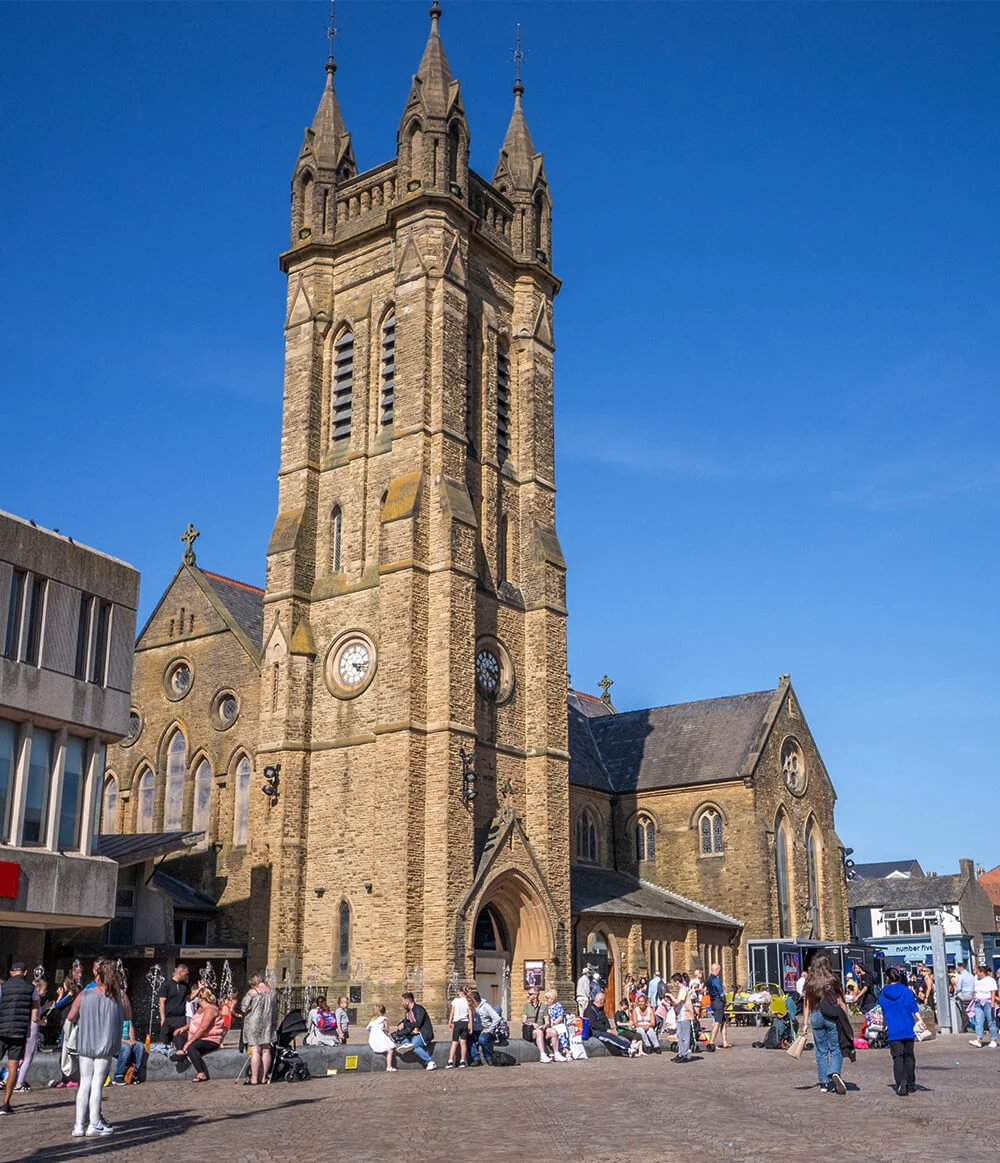
In Porter’s Guide to Blackpool, Fleetwood, Lytham, etc. of 1871, the old church was described unflatteringly as “a plain brick edifice, with a low embattled tower, and destitute of any architectural beauty.” Its small churchyard was closed to burials in 1873 following the opening of Layton Cemetery, approximately one and a half miles away. Recognising the need for a more substantial and architecturally distinguished place of worship, the parish resolved to build anew. The foundation stone of the present church was laid in 1877 by Dr William Cocker, Blackpool’s first mayor, who contributed one thousand pounds towards the construction cost. Designed by the architectural firm of Garlick, Park and Sykes, the new building was completed the following year and consecrated on 25 June 1878 by James Fraser, Bishop of Manchester. Executed in the Early English Gothic style, it is constructed from yellow stone with ashlar interiors and slate roofs. The south-west tower rises in four stages, with angled buttresses crowned by pinnacles and finials; each face of the belfry is pierced by two tall louvred openings.
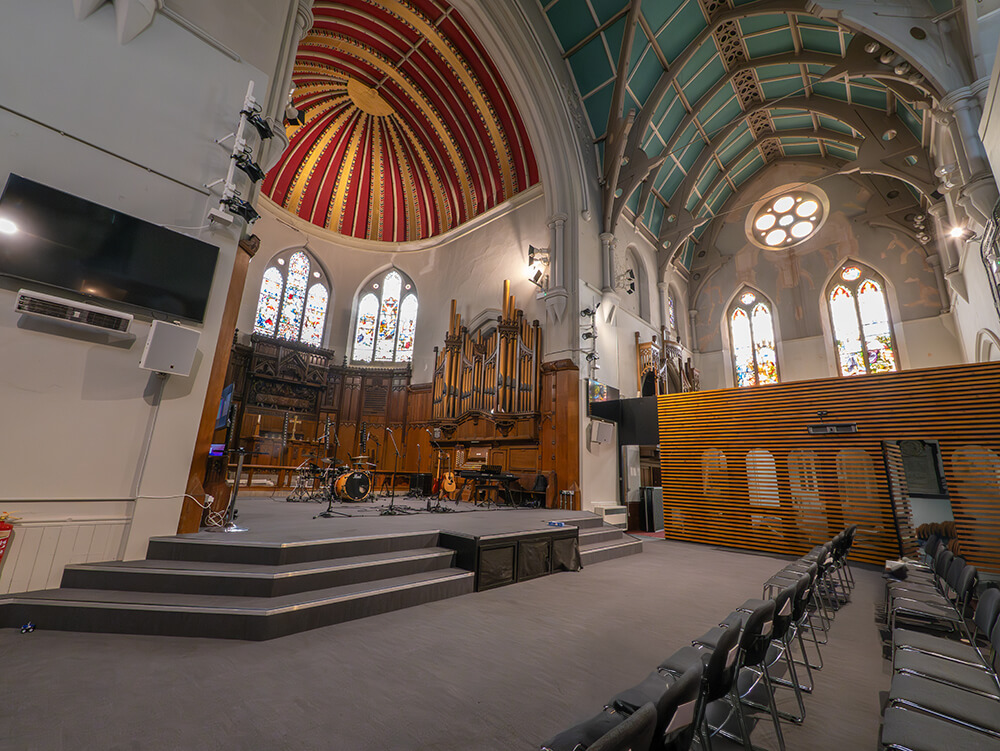
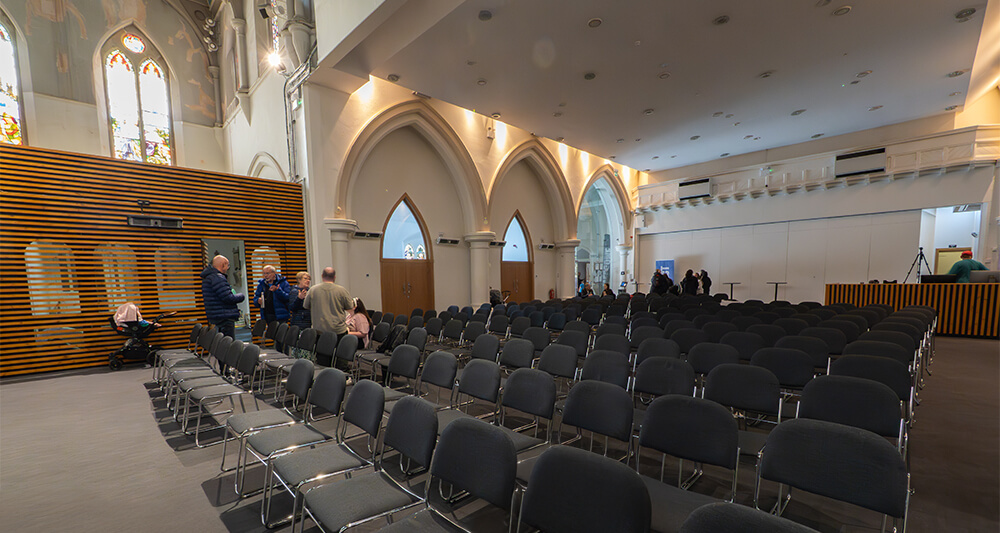
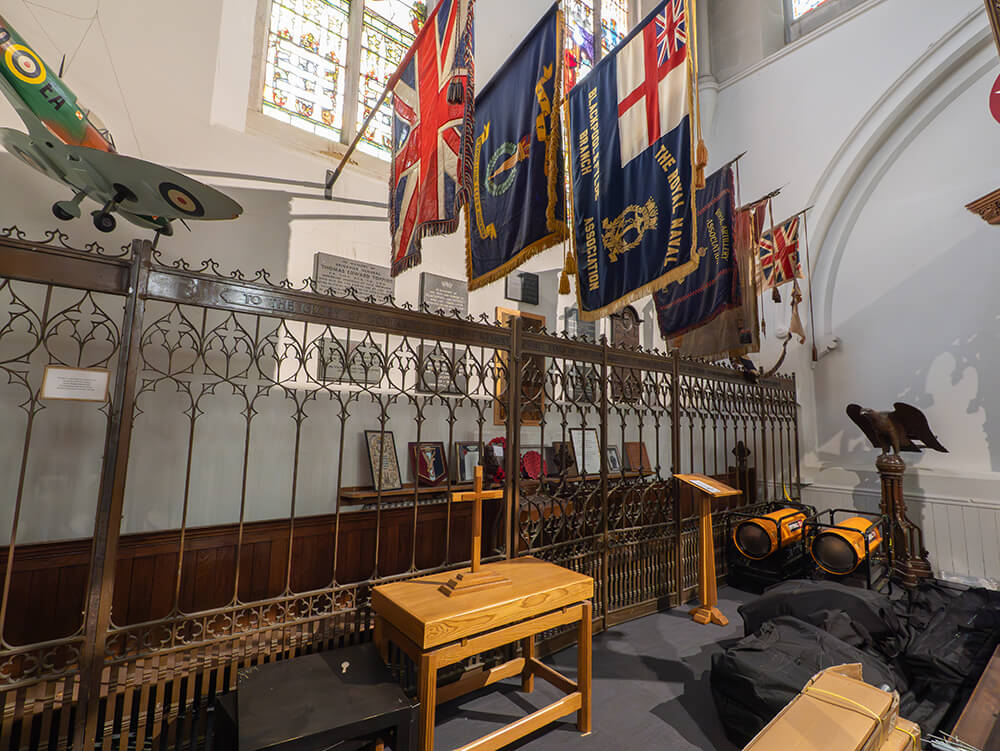
The church’s plan comprises a nave with low aisles, tall transepts and an apsidal chancel. Inside, the nave arcades are supported by cylindrical columns with circular capitals, while the chancel contains an elegant Gothic screen and finely crafted wooden panelling. The overall composition, simple yet dignified, reflects the restrained revivalism favoured by many late-Victorian church architects. St John’s was granted Grade II listed status on 20 October 1983, recognising it as a building of national importance and special interest. A century of continuous use left the structure in need of attention, and a programme of restoration was carried out in 1986. Between 2000 and 2006 a more extensive renovation, costing approximately £1.6 million, transformed the church’s interior to meet modern needs. This included the creation of a community and conference centre and the provision of dedicated facilities for the local homelessness charity, Streetlife.
Today, St John the Evangelist remains both a place of worship and a hub for civic and charitable activity. Its modernised interior, designed to accommodate worship, meetings and outreach, reflects the church’s continuing role at the centre of Blackpool’s community life—a balance of historic architecture and contemporary mission that embodies the town’s evolving spiritual heritage.
Images by © Deeper Blue Marketing & Design Ltd


