






















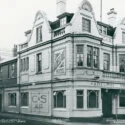
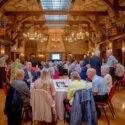


The Church of St Stephen-on-the-Cliffs, standing prominently on Holmfield Road in Blackpool, is one of the town’s most distinctive ecclesiastical landmarks. It serves as an active Anglican parish church within the Deanery of Blackpool, the Archdeaconry of Lancaster and the Diocese of Blackburn. Known locally as “The Church on the Cliffs,” it has long been associated with the life and culture of the resort, in particular its enduring relationship with the world of theatre and entertainment.
The parish originated as a mission of All Hallows Church, Bispham, and first opened its doors in 1912 to serve the expanding northern suburbs of Blackpool. By 1919 the mission had grown sufficiently to become a parish in its own right, though its original building soon proved too small to accommodate the rising congregation. Fundraising efforts led to the decision to construct a larger, more permanent church on a site north of the mission building. The foundation stone was laid on 1 July 1925 by the Right Reverend William Temple, then Bishop of Manchester and later Archbishop of Canterbury. The design was undertaken by Henry Paley of the distinguished Lancaster architectural firm Austin and Paley.
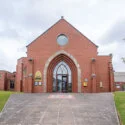
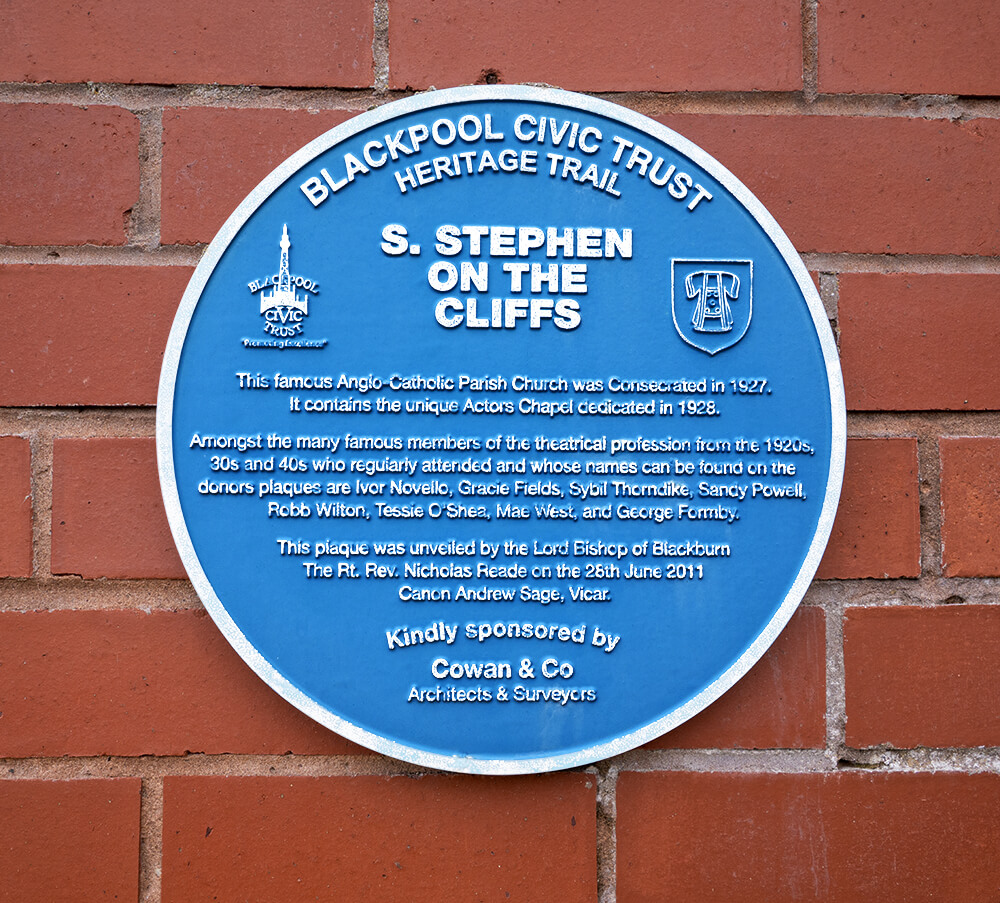
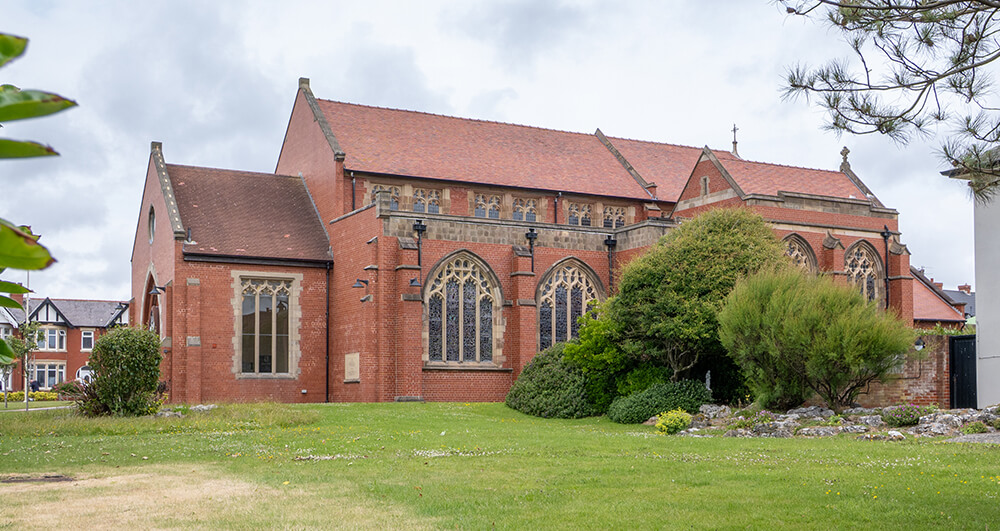
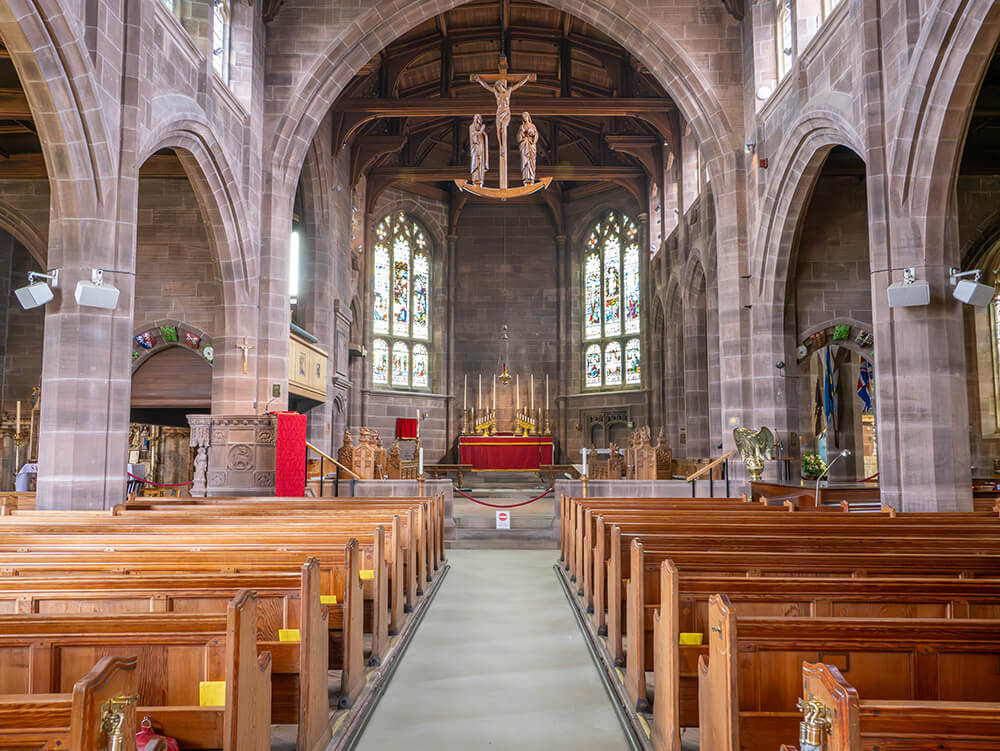
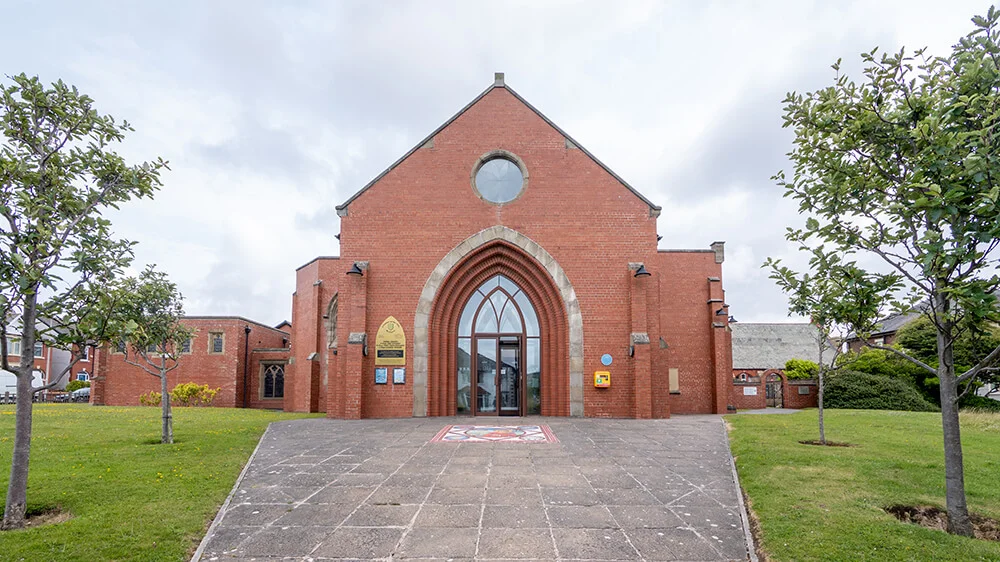
Consecrated on 12 October 1927 by the Right Reverend Percy Herbert, the first Bishop of Blackburn, the new church cost approximately £20,000 and initially seated four hundred worshippers. At the time of its consecration only the eastern section and the first two bays were complete, but even in this unfinished state the building was recognised as a fine example of modern Gothic design. Constructed of bright red brick with stone dressings, it displays tracery in the Decorated style, with an interior lined in warm red sandstone.
The church quickly developed a unique association with the theatrical community of Blackpool, whose members found both sanctuary and inspiration within its walls. In 1929 the celebrated Actors’ Chapel was created within the north aisle to honour performers who had appeared in the town’s theatres. Its reredos is painted with figures of singers, dancers, entertainers and Saint Genesius, patron saint of actors, while alabaster tablets on the walls bear the names of famous performers including Noël Coward, Sybil Thorndike, Gracie Fields, Arthur Askey, George Formby, Ivor Novello, Mae West, and Edith Evans.
Among the church’s notable artworks is a stained-glass window by Baron Arild Rosencrantz, installed in 1935 in memory of the impresario John Huddlestone and John Tiller, creator of the Tiller Girls. It depicts Parsifal, symbolising opera; Everyman, representing drama; and Galahad, emblematic of virtue. Additional windows by Shrigley and Hunt from the 1930s and by Harry Stammers from the 1960s contribute to the interior’s rich visual character. A statue of the Madonna, gifted by the performer Tessie O’Shea, further connects the church to the entertainment heritage of the Fylde Coast.
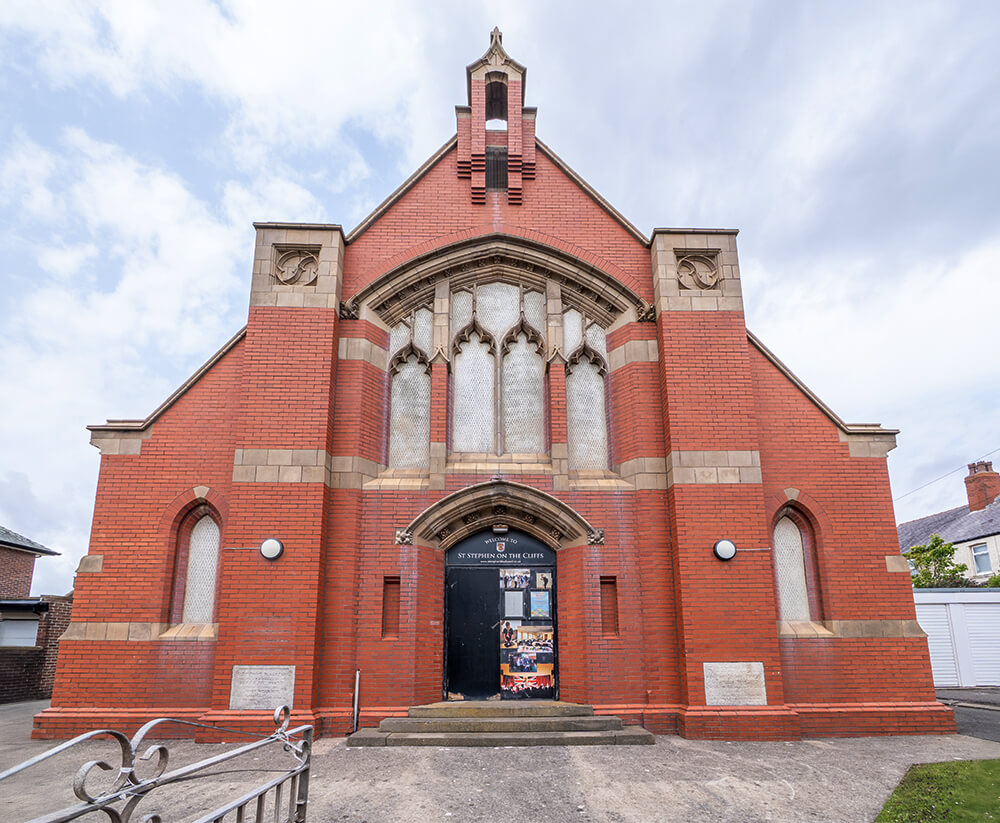
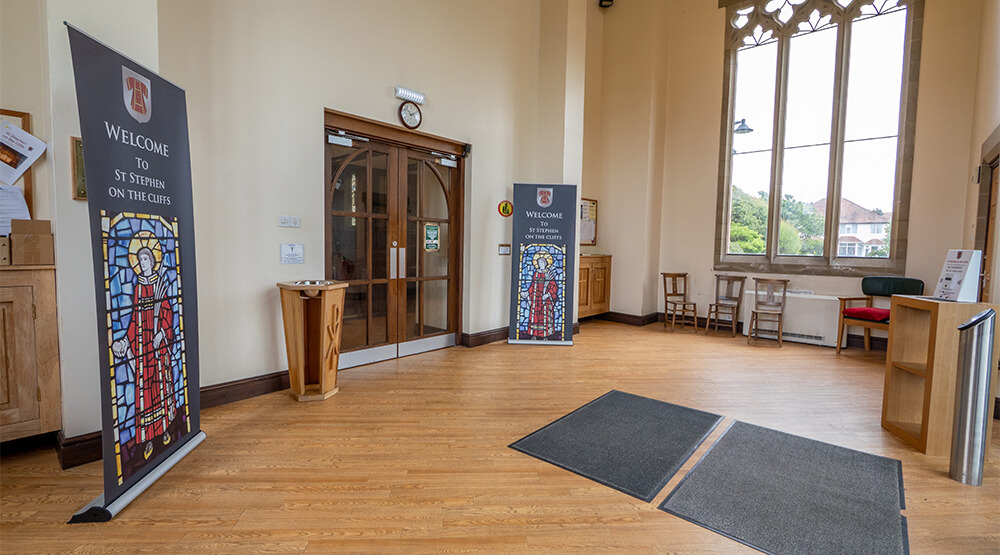
Subsequent additions have maintained the building’s vitality. In 1949 a columbarium designed by Edwin Carpenter was added, and in 2001–02 the architect Stephen Eccles oversaw the construction of a porch, narthex and baptistry. The original mission church survives nearby as the parish hall.
The interior furnishings, dating largely from 1927, are finely executed, with choir stalls carved with angel musicians and saints, and an integral sandstone pulpit adorned with canopied figures. The three-manual pipe organ, built by Henry Willis between 1881 and 1895 for St Philip’s Church, Blackburn, was relocated to St Stephen’s in 1975.
For over a century, St Stephen-on-the-Cliffs has stood as both a place of worship and a cultural landmark—a church where faith and the performing arts have met in harmony. Its enduring ties to the entertainment world, together with its architectural quality and commanding coastal position, make it one of Blackpool’s most distinctive and historically significant buildings.
Images by © Deeper Blue Marketing & Design Ltd


