
































It could be argued that Sheryl Hudders first came to wider public attention in September of 2002, when she had an exhibition in Blackpool, showcasing her rapidly evolving style and creative approach. At the time, she was emerging from her studies at Lancaster University, where her artistic voice had developed considerably. She spoke then of exploring personal relationships as a source of inspiration, drawing on connections and lived experience to shape the emotional core of her work.
During this early period, she described her practice as primarily figurative and often executed in black and white — though she was quick to note that she did not restrict herself to this palette. Her paintings from the era were notable for their boldness: big, brash, colourful pieces that carried a strong sense of movement and confidence. She also embraced a hands-on, experimental method in which she made her own paints from pure pigment. Working flat, she allowed chance to play its part, pouring, blowing and brushing the medium to create unpredictable textures and layered visual effects. The result was work that felt alive, dynamic and unafraid of risk. Following her Blackpool exhibition, she took this momentum to Belfast, where she mounted a solo show that further cemented her reputation as an artist to watch.
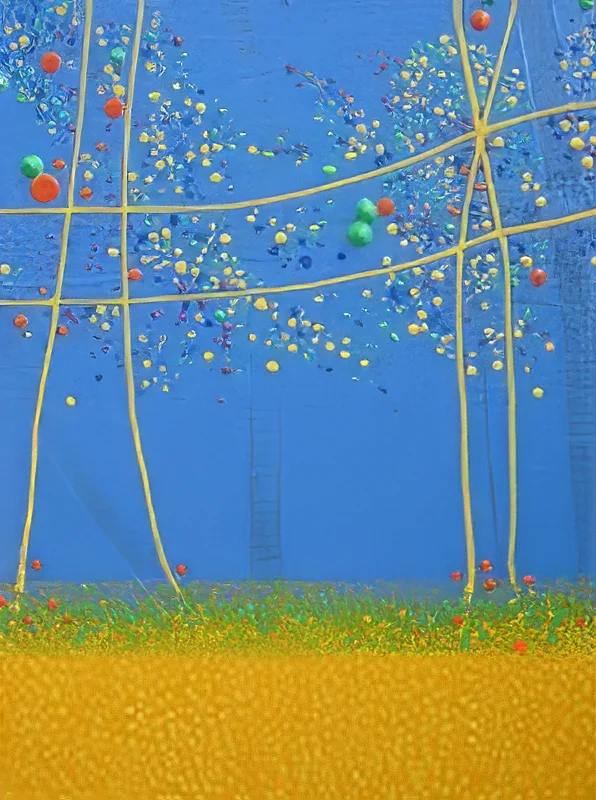
At another exhibition fifteen years later, on 11 December 2017, Hudders had arrived at a very different phase of her artistic journey — but one that demonstrated the same instinct for exploration. Working at Blackpool’s Blott Studio, she presented a new body of work titled ‘Bones of the Earth’ during the studio’s Christmas Art Emporium. This series of drawings and paintings was inspired by a visit to the Dee Valley in Scotland, a landscape shaped by ancient Caledonian pine forests and silvery birch groves. Hudders found herself captivated by the markings, scars and tonal shifts in the bark of these trees, reading in them a kind of natural script shaped by time, weather and growth. In ‘Bones of the Earth’ series, she translated the tactile qualities of the bark into both drawn and painted compositions. Her work conveyed depth and texture with sensitivity, reflecting not only the material beauty of the forest but also a deeper sense of endurance and history within the natural landscape. The series marked a shift toward quieter, more contemplative themes, yet retained her signature attention to surface, structure and expressive mark-making.
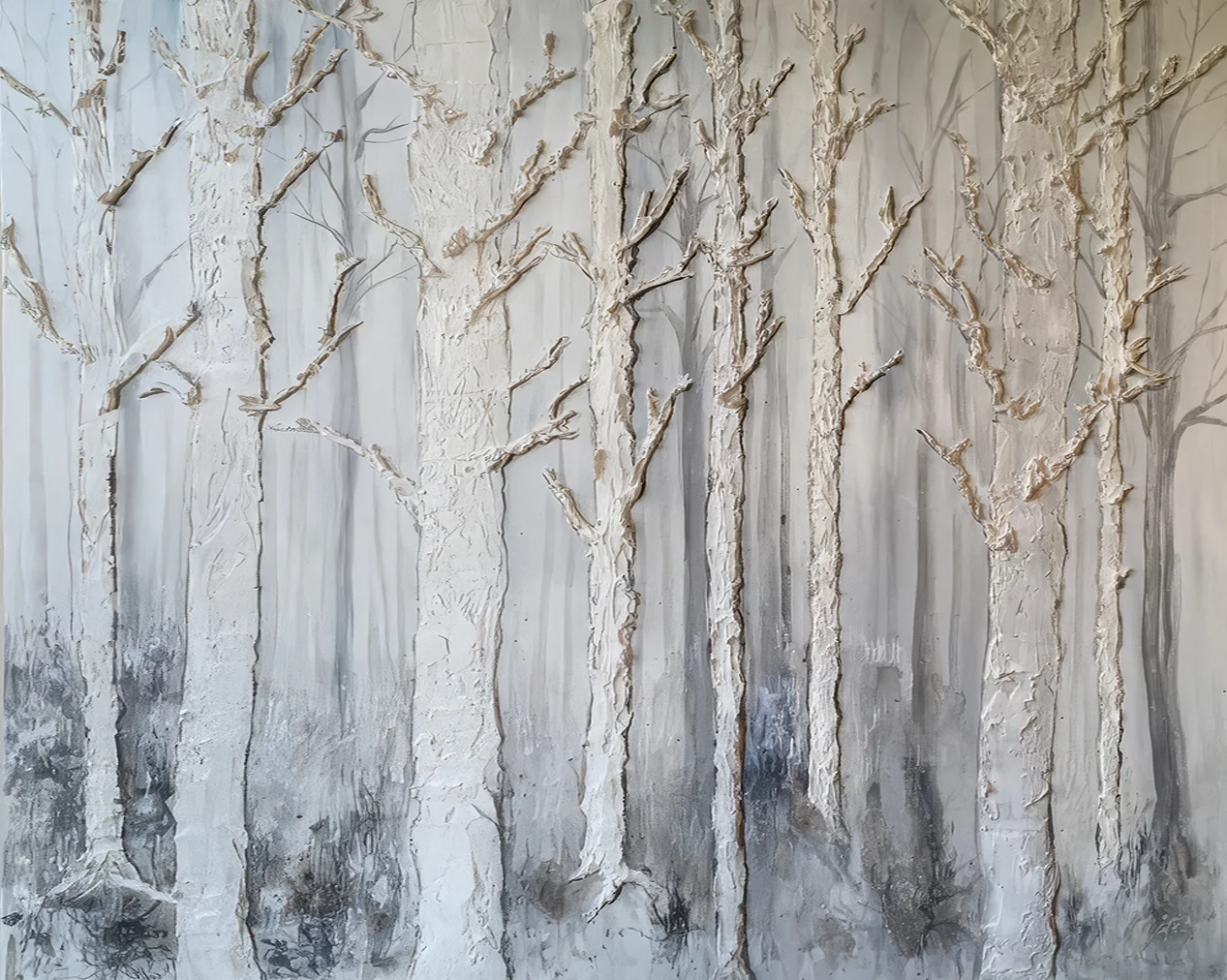
A painting from the ‘Bones of the Earth’ series
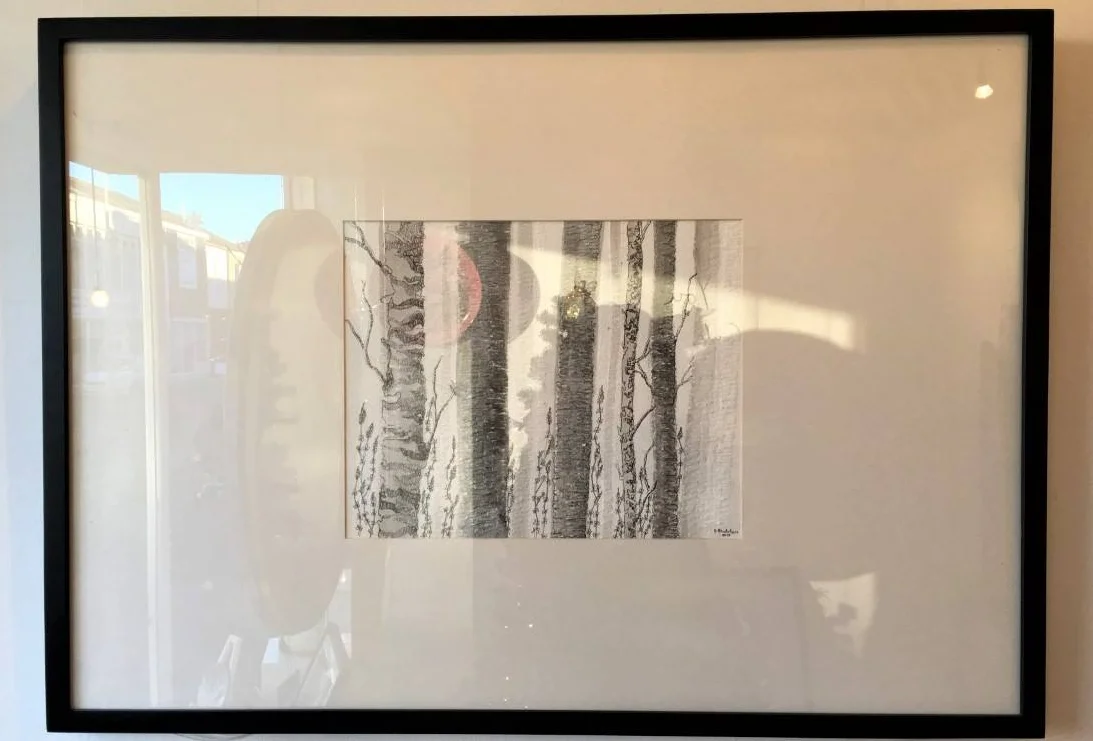
A drawing from the ‘Bones of the Earth’ series
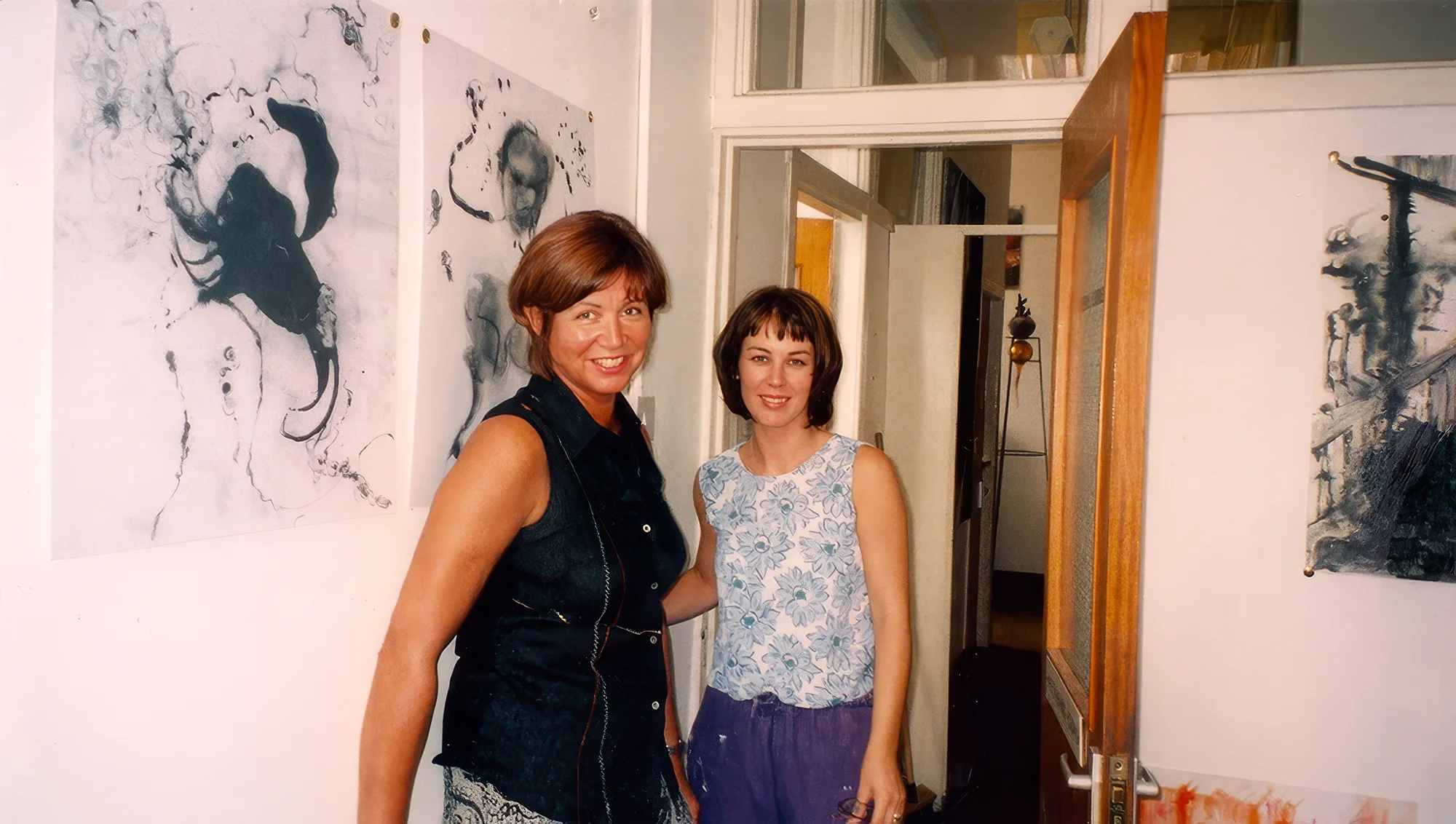
Sheryl Hudders & Ann Carragher in Ann’s studio
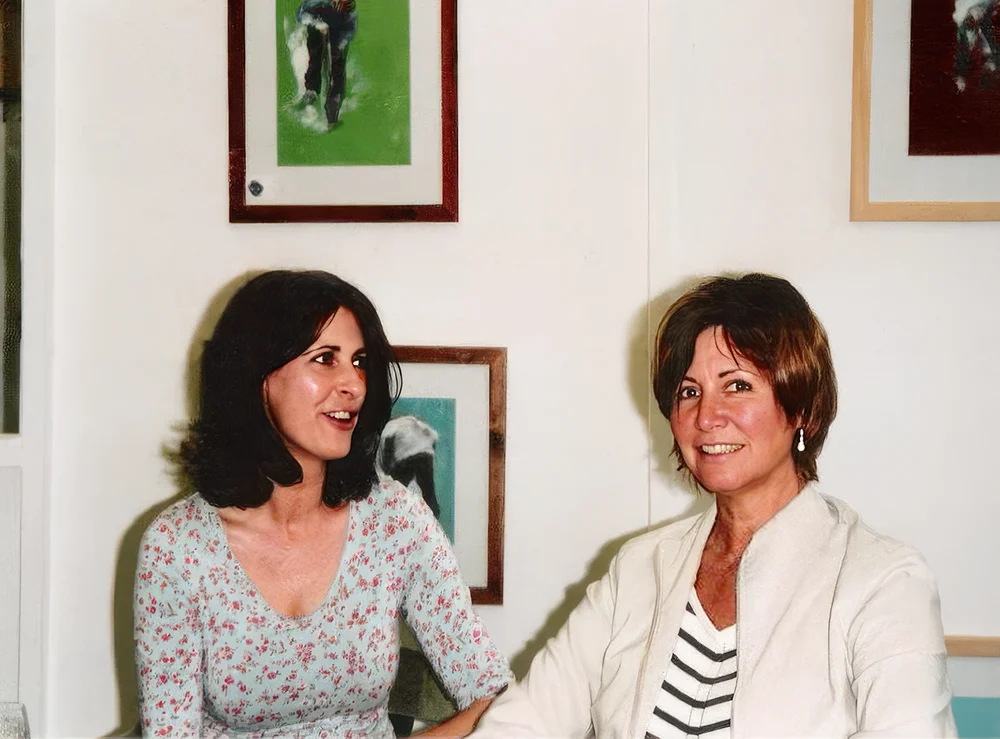
Outside her own artistic practice, Sheryl is part of a well-known creative partnership. She is married to Mark Hudders, who has long operated Granthams, a family-run printing, signage and art supplies business with branches in Blackpool and Preston. This business has morphed into an online business called Art Discount selling art supplies. Their daughter Charlotte is also an accomplished artist. In recent years, the Preston branch of Granthams has closed and the Blackpool branch has transitioned largely into an online business, offering a wide range of art materials to professionals, students and hobbyists across the region. For many local artists, Granthams remains a familiar and trusted name — a connection that further roots Sheryl within the Fylde Coast’s broader creative community.
From her early experimental paintings in the early 2000s to her later nature-inspired work, Sheryl Hudders has continued to evolve as an artist while contributing to the cultural fabric of the Fylde Coast. Her career reflects a sustained curiosity about material, form and the stories that lie beneath the surface of the visible world — an approach that remains as compelling today as it was when she first emerged on the local arts scene.
Text source: Lancaster Univeristy'swebsite Blot Studio's Facebook page
Images by © Sheryl Hudders


