



























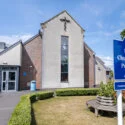













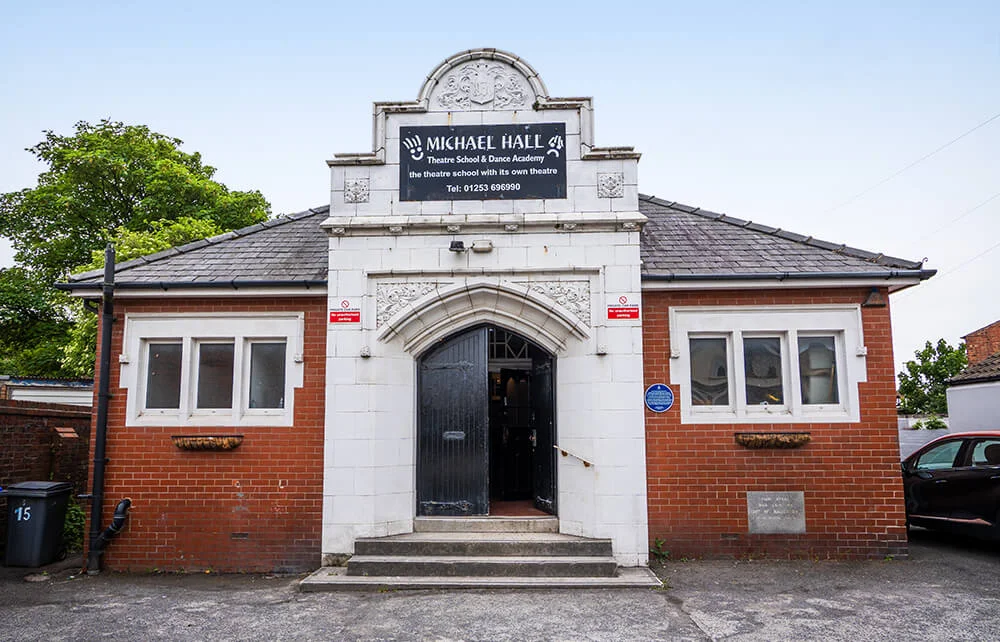
The former Marton Parish Church Hall on Preston Old Road, once the heart of Blackpool’s amateur musical life, has been honoured with a blue plaque in recognition of its long association with the Marton Operatic Society. For more than seventy years the hall served as the home of one of the town’s most enduring cultural institutions, where generations of performers and audiences gathered to enjoy the works of Gilbert and Sullivan and other operatic productions. The site’s history extends back to the mid-nineteenth century, when it was occupied by the Great Marton Church of England Girls’ School, later converted into an infants’ school. The current building, however, dates from 1930, when a new parish hall for Marton Parish Church was commissioned and built by Atherton Bros. The hall opened in October of that year, reflecting both the parish’s growth and the broader interwar expansion of Blackpool’s community institutions.
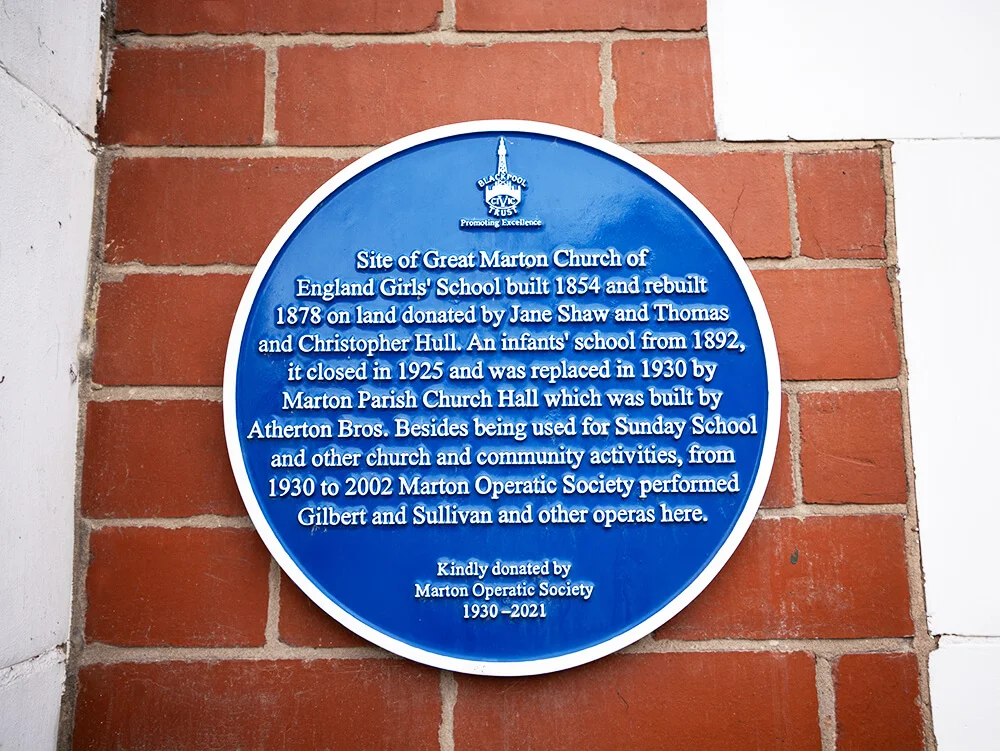
That same year the Reverend Charles McReady, vicar of Marton Parish Church, founded the Marton Operatic Society. The society quickly became a fixture of the town’s cultural life, performing the full range of Gilbert and Sullivan operas as well as other popular works. For seventy-two years, from 1930 until 2002, its productions were staged within the church hall, establishing a strong link between the building and the musical heritage of the Fylde Coast. The company’s performances continued across the region for nearly a century, sustaining local interest in operetta long after many similar groups elsewhere had declined. After ninety-one years of continuous activity, the Marton Operatic Society was dissolved in 2021, a decision prompted largely by the disruption caused by the Covid-19 pandemic. To commemorate the group’s legacy, former committee members arranged for a blue plaque to be installed on the wall of the old church hall. The plaque, unveiled by Blackpool’s Mayor, Councillor Amy Cross, stands as a public record of the society’s contribution to the town’s cultural history.
The plaque’s installation was made possible through the joint efforts of the Blackpool Civic Trust and the Marton Operatic Society, which funded the project using the remaining balance of the society’s accounts. The residual funds were subsequently donated to local charities and community causes. The building itself now serves as the home of the Michael Hall Theatre School, ensuring that the site continues its long association with the performing arts. The blue plaque thus links Blackpool’s present creative life with a proud past, marking the hall as a place where local talent and community spirit combined to produce nearly a century of musical enjoyment.
Text source: Blackpool Gazette'swebsite website
Images by © Deeper Blue Marketing & Design Ltd


