


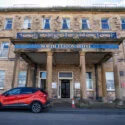





Before 1990, the Blackpool Tower Circus was famous across Britain and beyond for its grand animal spectacles—none more beloved than the elephants. For nearly a century, they were a central part of the Tower’s identity, embodying the magic and extravagance of the traditional circus. Their morning walks along Blackpool’s seafront became an institution in themselves: a daily ritual that drew crowds of fascinated holidaymakers and locals who lined the promenade to watch the elephants lumber down to the sea, where they splashed and played in the shallows before returning to their underground stables beneath the Tower.
The Blackpool Tower Circus first opened in 1894, a year after the Tower itself was completed. The inclusion of live animal acts was part of its early success—offering audiences the exotic thrill of seeing lions, tigers, horses, and elephants up close in a purpose-built arena that seated over 3,000 people. The first elephants arrived in 1895 and were trained by Julius Wagner, a celebrated German animal trainer who had been brought in to help establish the Tower’s circus programme. Wagner’s elephants performed complex tricks—balancing on stools, dancing in formation, and even taking part in comedic sketches—and quickly became the highlight of the show.
In the early 20th century, the Tower Circus gained international acclaim, attracting performers and trainers from across Europe. The elephants, often given individual names and personalities, became household favourites. During the 1920s and 1930s, they were featured in postcards, publicity posters, and newsreels that helped to establish Blackpool as one of the entertainment capitals of the world. The elephants’ daily promenade became a symbol of the resort’s glamour and vitality. Visitors recalled seeing them escorted along the promenade past the Tower’s shadow, sometimes carrying performers in costume, as part of elaborate publicity stunts.
During the Second World War, performances at the Tower Circus continued, offering escapism to both soldiers on leave and civilians. The elephants were famously used to haul supplies and equipment when fuel rationing limited vehicle use. After the war, the circus resumed its full programme under new direction, continuing the long tradition of animal performance that defined much of the postwar British circus scene.
The Tower’s elephants lived in specially designed accommodation directly beneath the circus ring, in a network of tunnels, pens, and stables built during the Tower’s construction. These underground quarters included areas for large animals such as lions, tigers, and horses. Because the Tower is now a Grade I listed building, these chambers remain preserved as a historical feature, offering a rare glimpse into the working life of a bygone era.
By the late 1970s and 1980s, however, changing public attitudes toward animal welfare began to reshape the entertainment industry. Concerns grew about the ethical implications of using wild animals for public amusement. In response to this shift, and in keeping with the growing global movement to protect animal welfare, the Blackpool Tower Circus made the landmark decision to end live animal performances in 1990.
The elephants took their final bow that year, bringing to a close nearly 95 years of animal acts at the Tower. In their place, the circus embraced a new era of performance, focusing exclusively on human artistry—acrobats, trapeze artists, clowns, and international circus troupes.
Today, while the elephants are long gone, their story remains a cherished chapter in the history of both Blackpool and the Tower Circus. The sight of elephants walking along the seafront in the early morning mist has become part of local folklore—a vivid reminder of an age when entertainment was grand, exotic, and unlike anything else in the world.
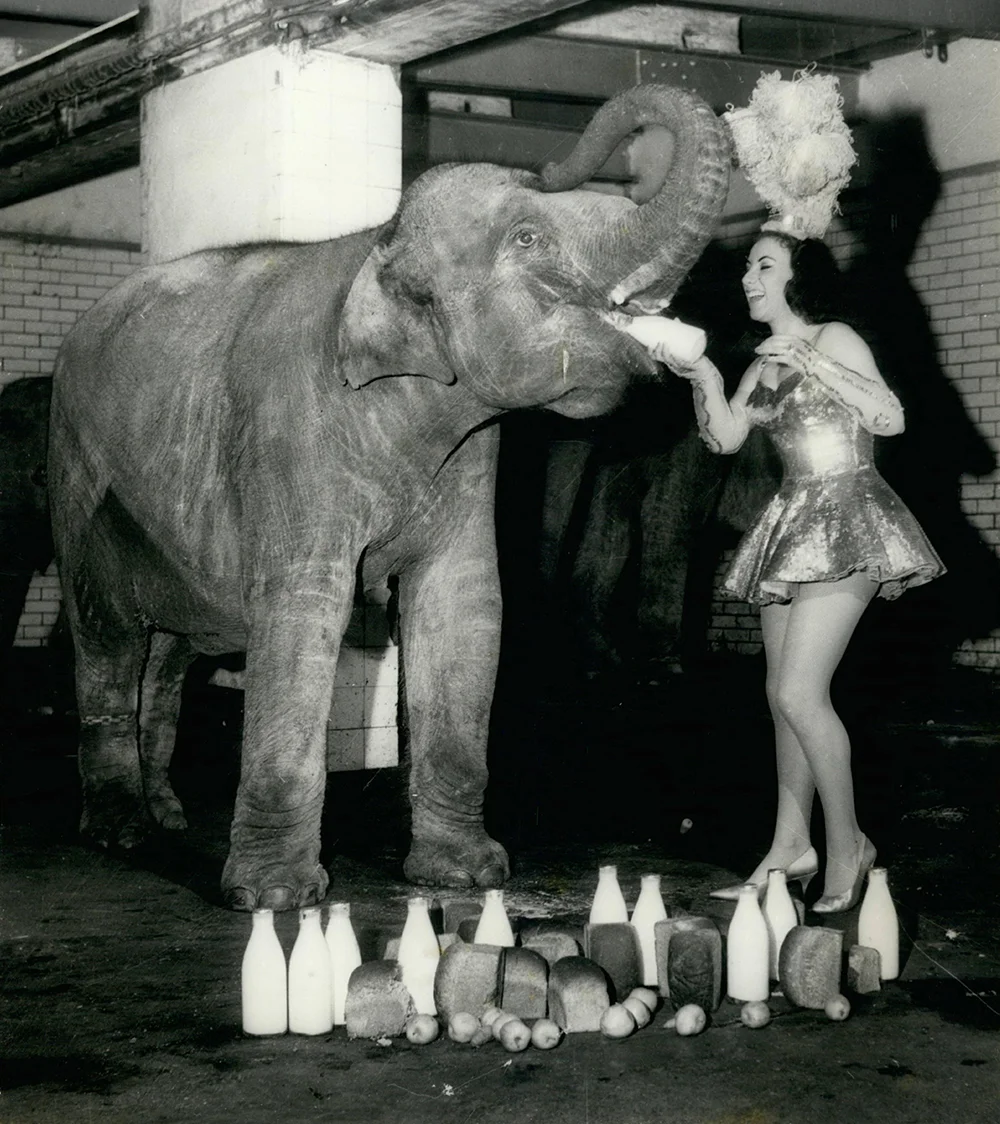
1967 – Back on her feet after the largest operation in the world five-year-old Frances, an elephant at the Blackpool Tower Circus, is back on her feet again after undergoing a four hour operation for a strangulated hernia. Each day she is restricted to 36 pints of milk, 40 loaves, 48 bananas and 151 lbs. of carrots. The operation was performed single handed by a local veterinary surgeon who had to administer enough anaesthetic for 50 people. Photo Shows: Frances tucking into her light invalid diet © Keystone Pictures USA/ZUMAPRESS.com/Alamy Live News
Featured Image © Alamy


