





















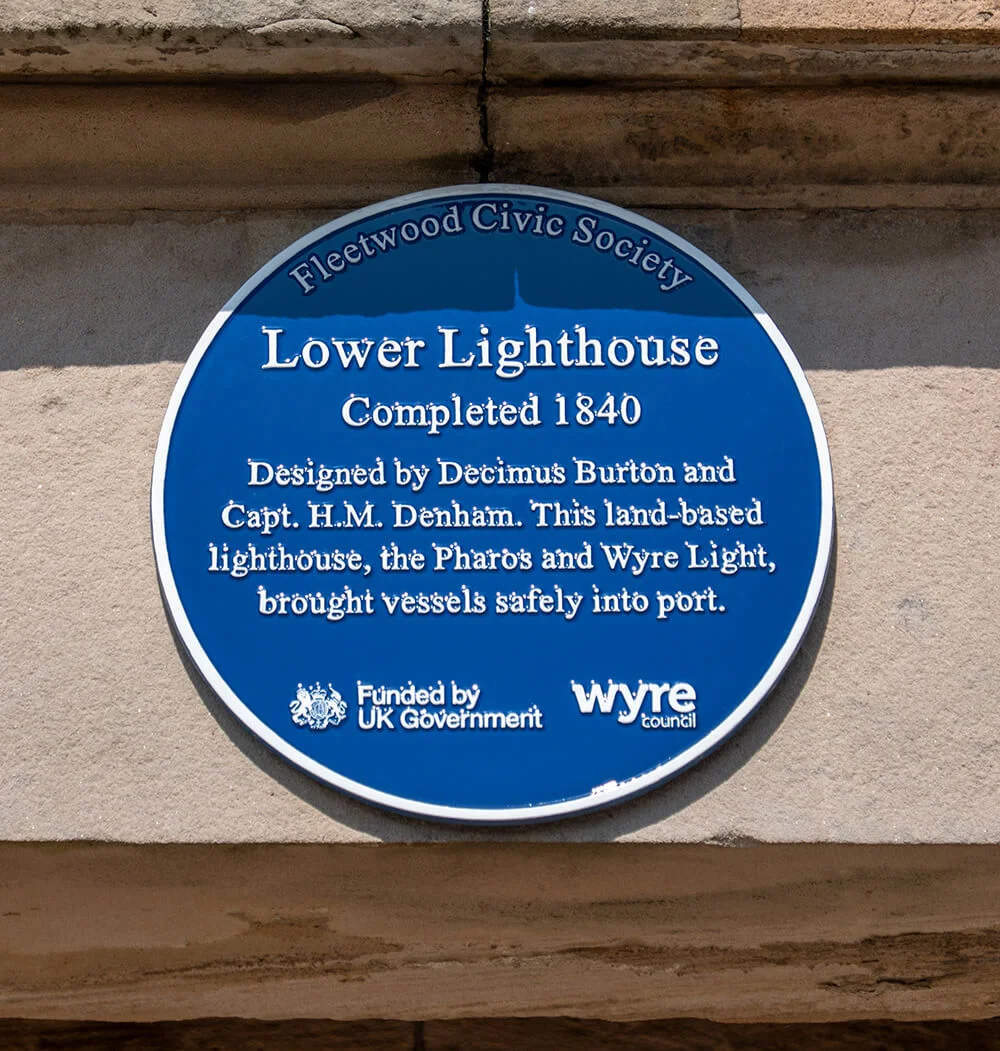
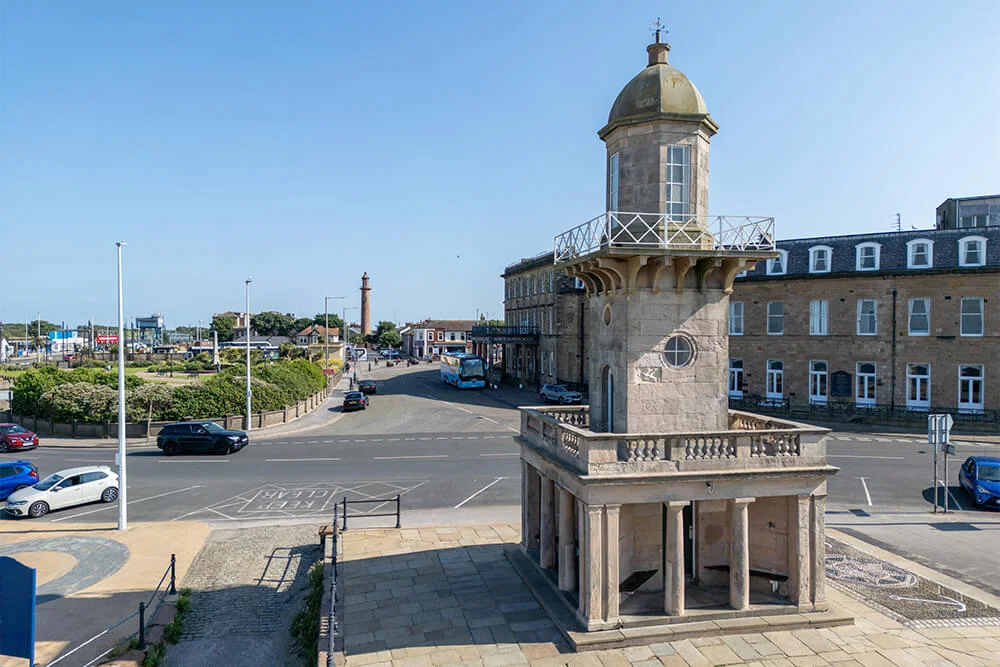
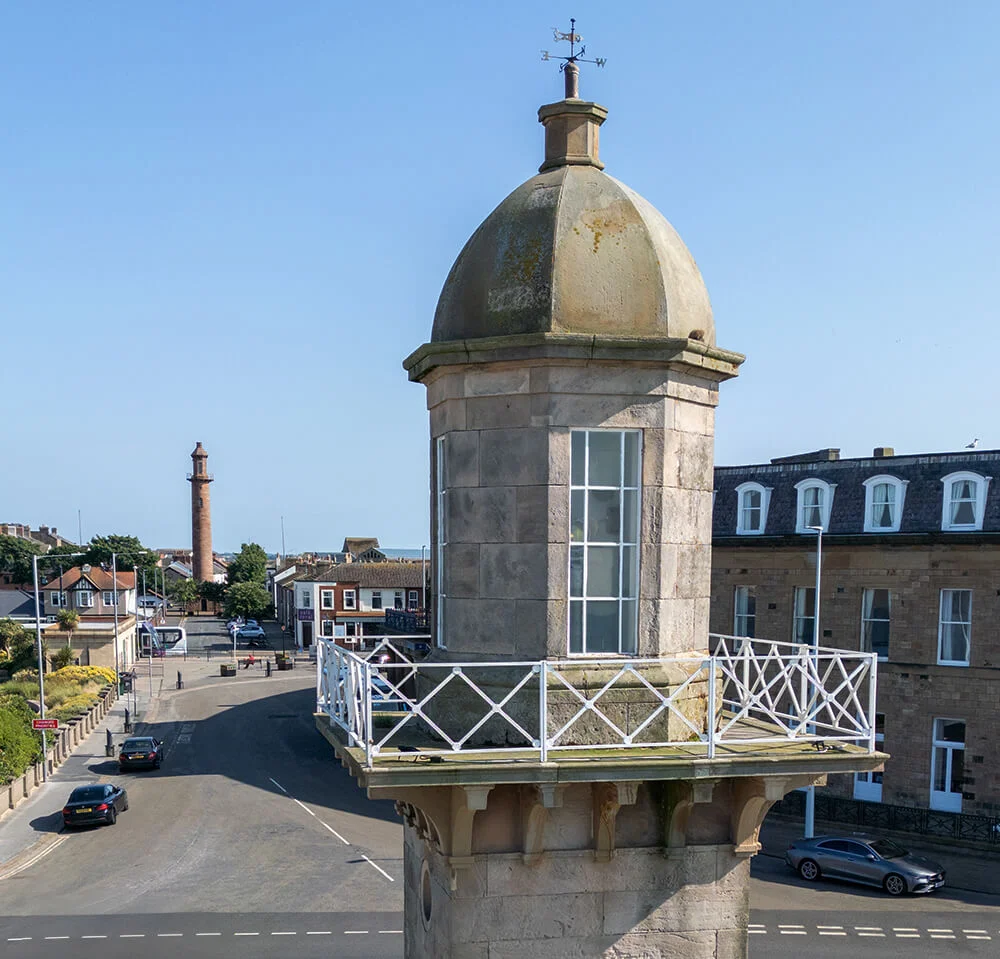
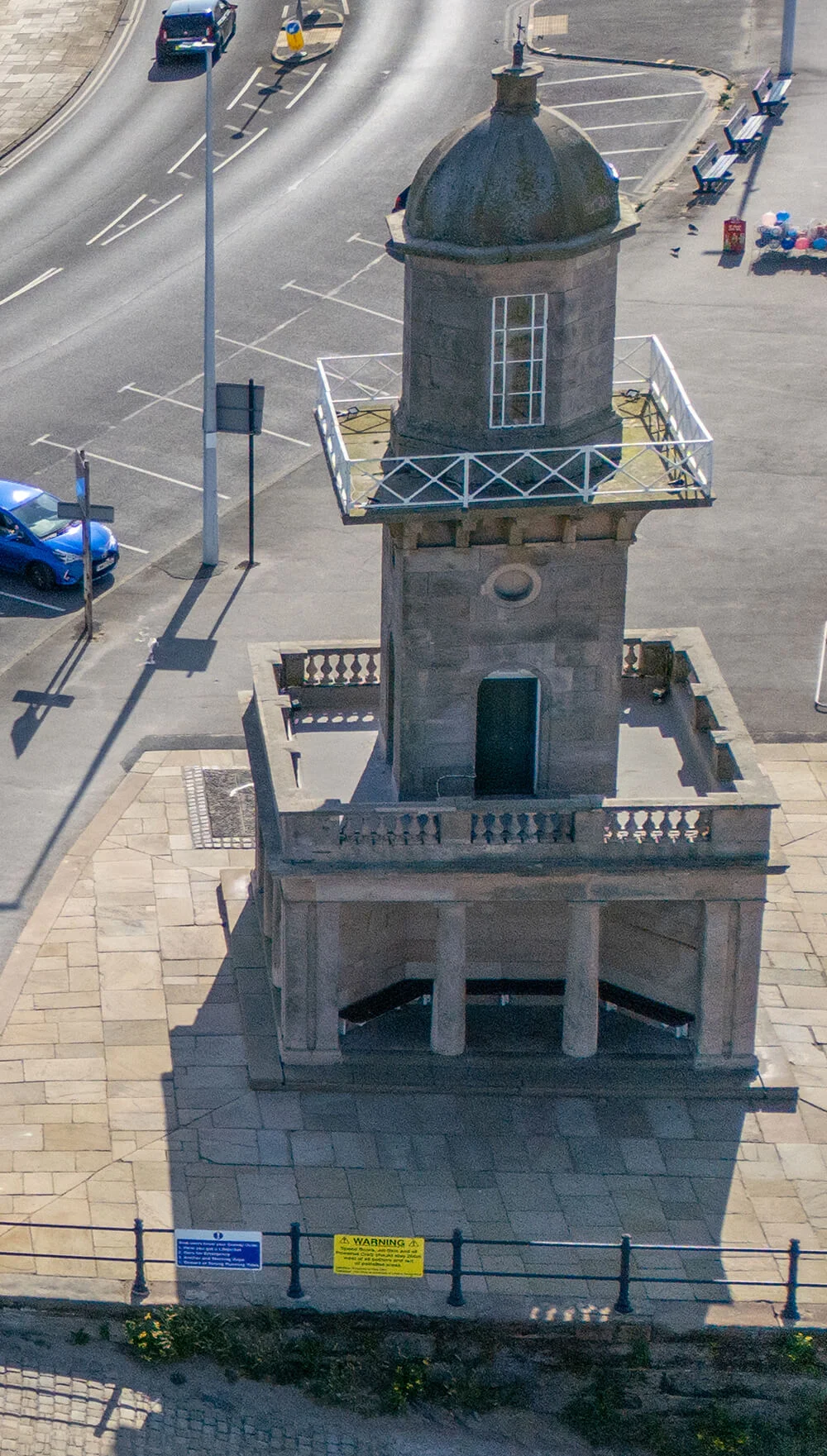
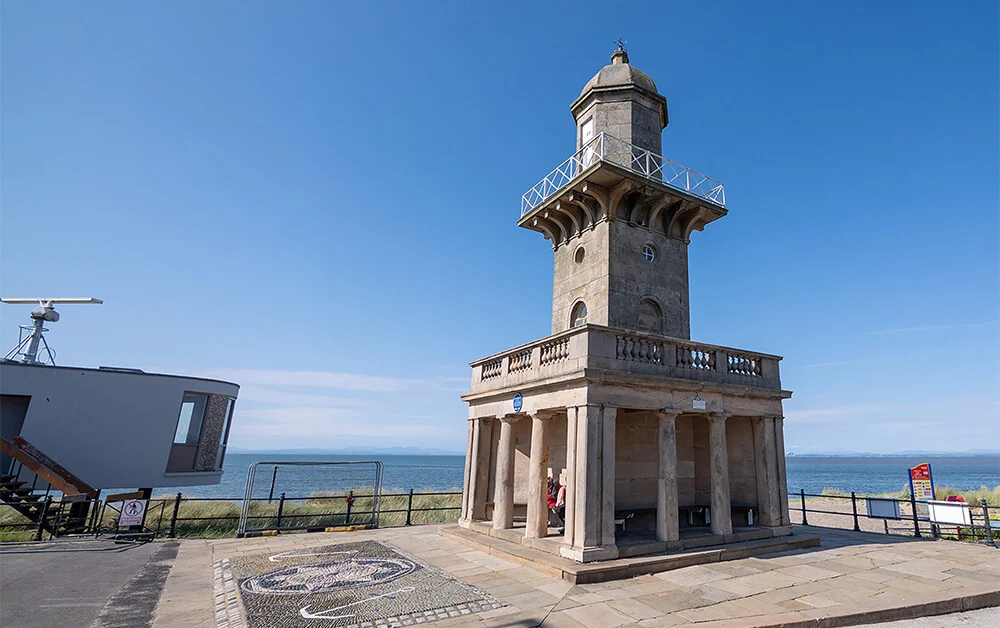
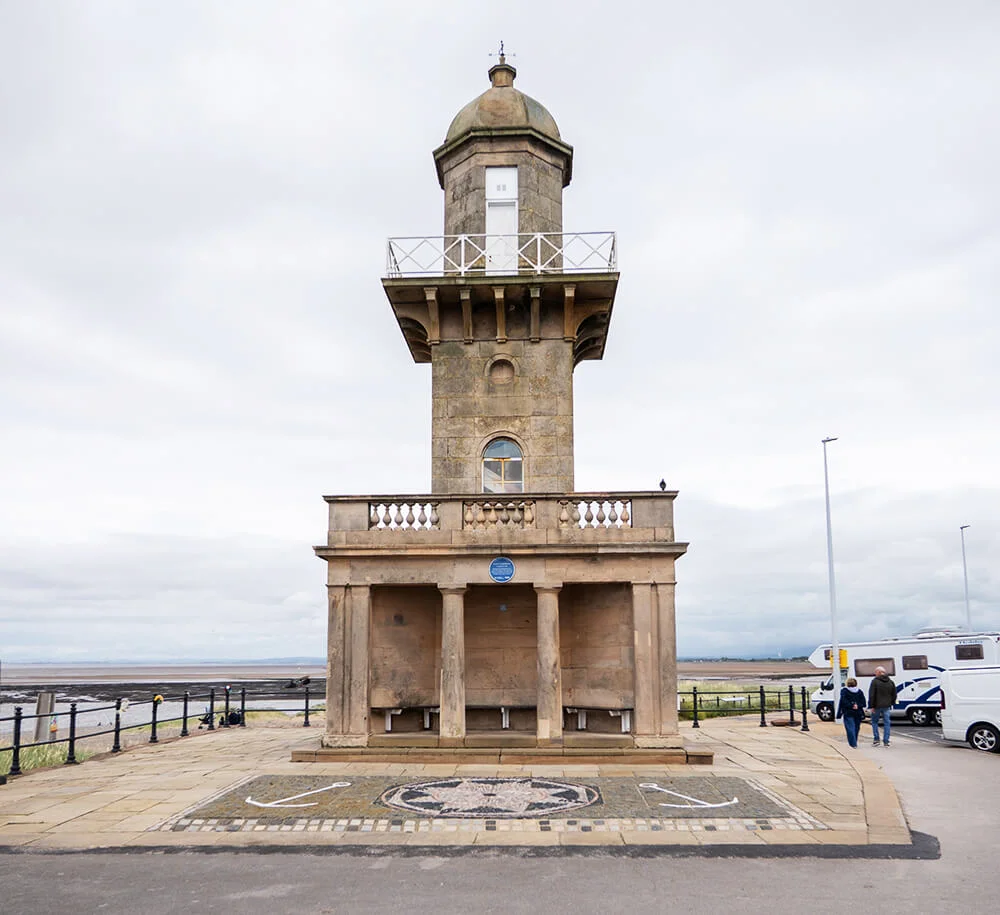
The Beach Lighthouse, also known as the Lower Lighthouse, stands on the seafront at Fleetwood, Lancashire. Rising forty-four feet in height, the sandstone structure was designed in 1839 by architect Decimus Burton in collaboration with Captain H. M. Denham, a naval hydrographer. Burton had been commissioned three years earlier by Sir Peter Hesketh Fleetwood to plan and design the new town of Fleetwood. In contrast to the utilitarian appearance of most British lighthouses, the Beach Lighthouse was conceived in a neoclassical style, featuring a square, colonnaded base, a square tower, and an octagonal lantern crowned by a viewing gallery.
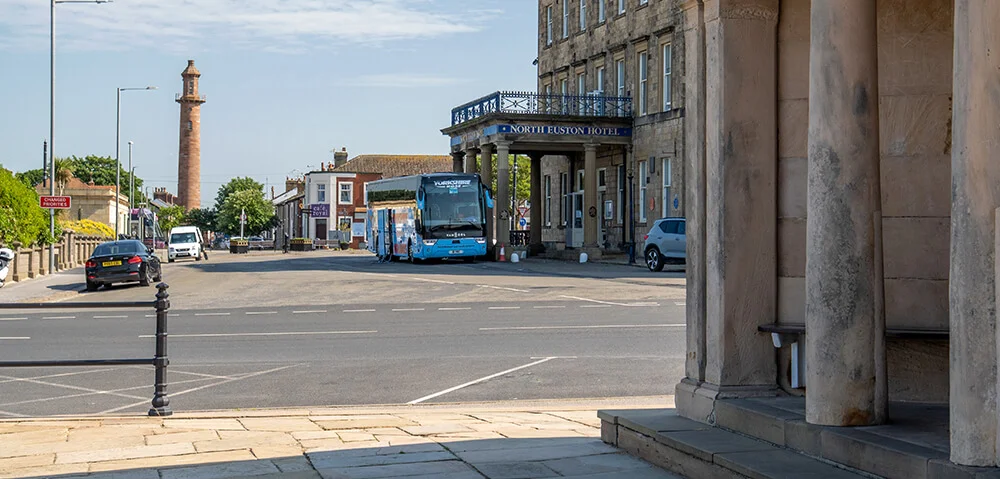
Constructed as a pair with the Pharos Lighthouse, also designed by Burton, the two lights were intended to guide vessels safely into the Wyre Estuary. When viewed in alignment—one light directly above the other—they formed a navigational leading line, enabling ships to follow a safe course through the channel. Together they offered a visual range of approximately twelve nautical miles, with their bearings aligning toward the Wyre Light, located on the North Wharf Bank some two nautical miles offshore.
Both Fleetwood lighthouses were first illuminated on 1 December 1840, operating initially on the town’s gas supply. A single parabolic reflector was fitted behind each burner to amplify the beam, and in later years both structures were converted to electric operation.
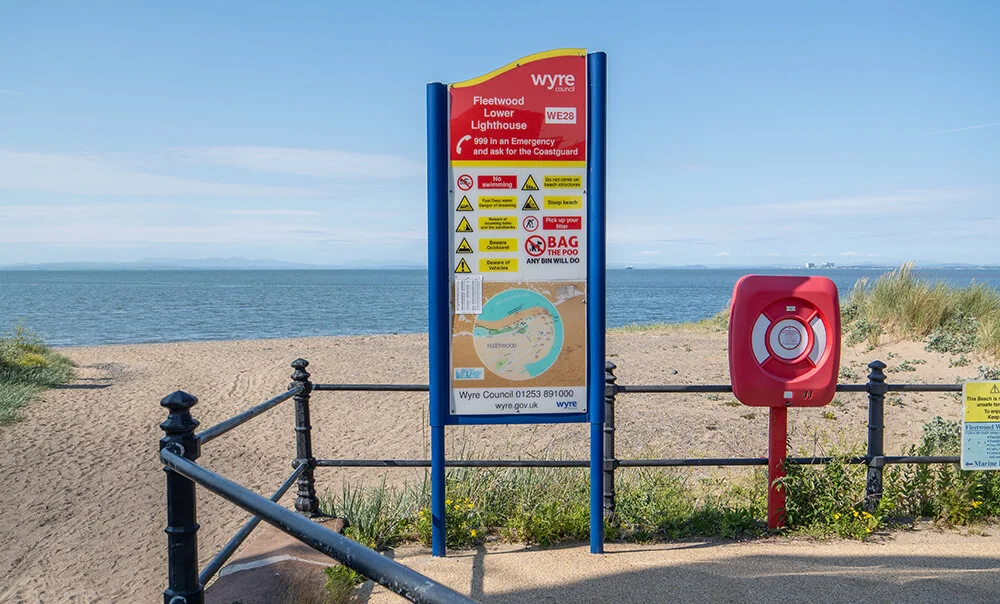
The Beach Lighthouse was officially recognised for its architectural and historical significance when it was designated a Grade II listed building on 26 April 1950. Today, it continues to be maintained by the Port of Fleetwood, serving as an enduring symbol of the town’s maritime heritage and of the visionary planning that shaped Fleetwood’s development as a 19th-century port town.
Be sure to have a look at Blackpool Timeline’s post on the third lighthouse in Fleetwood – Wyre Light.
Images by © Deeper Blue Marketing & Design Ltd


