






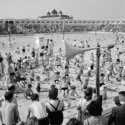


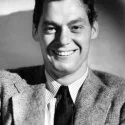









L. S. Lowry, one of Britain’s most distinctive and celebrated painters, maintained a long and meaningful relationship with Blackpool and the Fylde Coast, returning to the resort repeatedly throughout his life. A piece described as Beach Scene, Lancashire (thought to depict a coastal scene possibly around Lytham) is dated 1947. Although he is most often associated with the factory towns and industrial skylines of Greater Manchester and Salford, Lowry considered Blackpool an essential escape and a rich source of visual inspiration. His visits to the resort placed him among the millions of northern holidaymakers who saw Blackpool as a temporary release from the grime of industrial Britain, yet for Lowry the resort offered far more than leisure. It provided a subject that he approached with the same careful observation he brought to the mills, streets and crowds of his hometown.
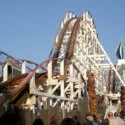
During these visits, Lowry produced several paintings that rank among his most accomplished seaside works. Scenes of Blackpool’s beach, promenade and iconic landmarks — especially Blackpool Tower — appeared in different periods of his career. Works such as The Beach at Blackpool and Blackpool Promenade captured the resort at mid-century, a time when its beaches, trams, piers and amusements drew vast crowds each summer. Lowry portrayed these scenes with his familiar combination of small, simplified figures and sweeping open spaces, using the vast shoreline and heavy skies of the coast to heighten the sense of movement, bustle and human activity. His 1959 painting Blackpool portrayed the seafront with a precision and affection that underlined his regard for the town as one of the North’s great communal gathering spots.
Blackpool appealed to Lowry for several reasons. The town’s atmosphere, with its wide beaches, strong light and ever-shifting weather, offered him the dramatic contrasts he favoured throughout his work. The Tower and the architectural lines of the promenade gave him the strong structural elements he relied upon to anchor his compositions. Most importantly, the crowds — families, day trippers, workers on holiday — allowed him to study human behaviour in a more joyful, relaxed setting than the industrial streets he painted at home. For Lowry, Blackpool was both a spectacle and a stage, a place where ordinary people moved together in patterns that fascinated him.
Lowry’s attachment to the Fylde Coast was not limited to Blackpool. He also formed a notable connection with Knott End-on-Sea, the small coastal village opposite Fleetwood at the mouth of the River Wyre. He visited Knott End on several occasions, particularly during the 1940s and 1950s, and sketched from the top of the ferry slipway that links the two sides of the estuary. The setting, quieter and more contemplative than Blackpool’s crowded promenade, appears to have appealed to Lowry’s fascination with solitary figures, open spaces and the movement of people between places. One of his works, The Jetty at Knott End, reflects his interest in the simple rhythms of life around the ferry crossing — a contrast to the dense urban scenes that defined much of his career. Today, Knott End commemorates his presence with a sculpture inspired by his characteristic “matchstick” figures, positioned near the spot where he is believed to have stood with his sketchbook.
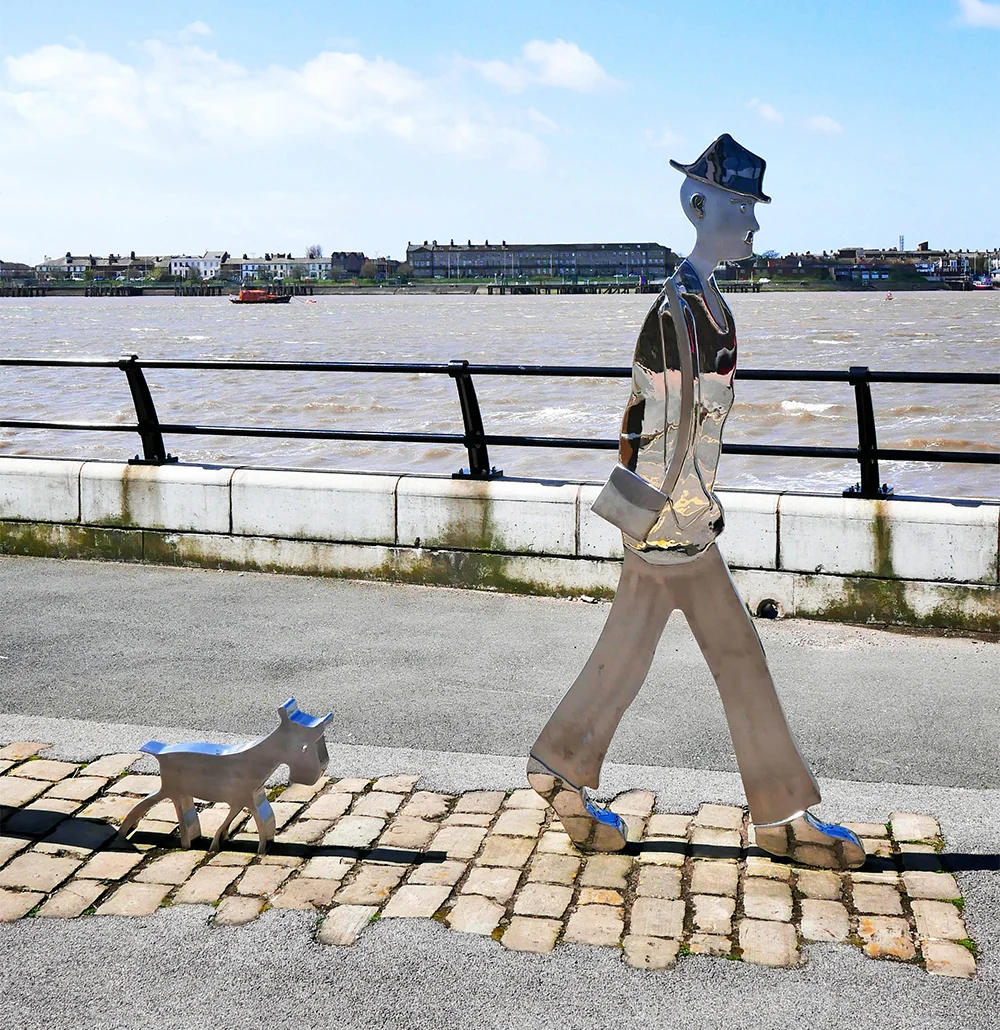
Matchstick man and dog sculpture on the seafront at Knott End, based on the paintings of LS Lowry
His ties to the wider coast extended into surrounding areas such as Lytham St Annes and Fleetwood, where he is known to have paused to sketch scenes or individual figures that later informed larger compositions. These stops underline his curiosity about the character of the Lancashire shoreline as a whole, from its bustling resorts to its quieter estuarine communities.
Today, Lowry’s paintings of Blackpool, Knott End and the Fylde Coast stand among the most recognisable artistic depictions of the region. They capture a moment in the area’s history when the seaside symbolised leisure, aspiration and the collective spirit of post-war Britain. They also reveal a different side of Lowry: an artist who, beyond the mills and terraces, was deeply attuned to the humour, atmosphere and humanity of the coast.
Here are some more significant dates:
• Lowry is documented as having visited Knott End-on-Sea during the 1940s and 1950s.
• A painting of his titled The Jetty at Knott End is dated 1957.
Poulton-le-Fylde
• Another work titled Country Road, near Lytham is signed and dated 1952.
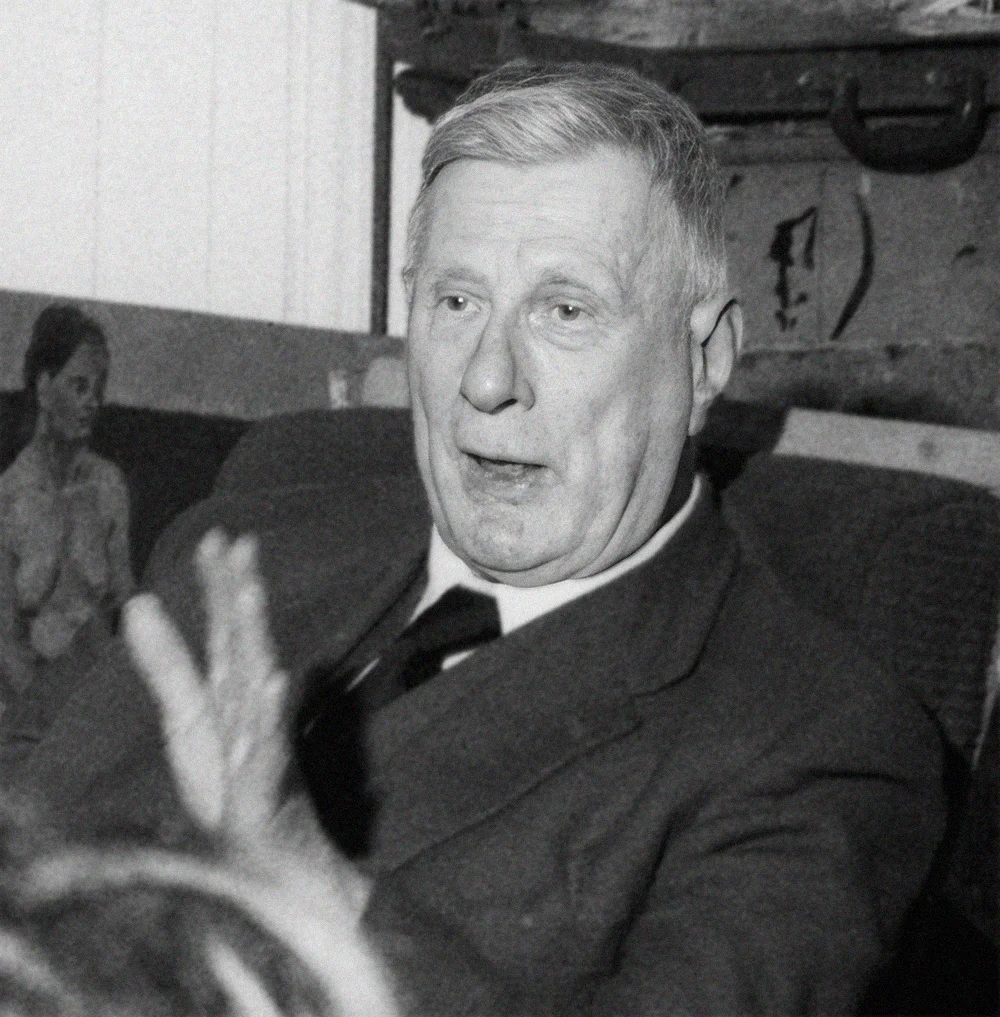
Artist L S Lowry visiting the College of Art , Maidstone , kent to talk to young art students. He has been working with Mervyn Levy (who teaches at Maidstone ) on a book about himself. Photo shows: Mr Lowry expressing his views on what the young painter should do – or not do. On the left is Mervyn Levy . 24 January 1961


