



























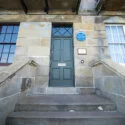

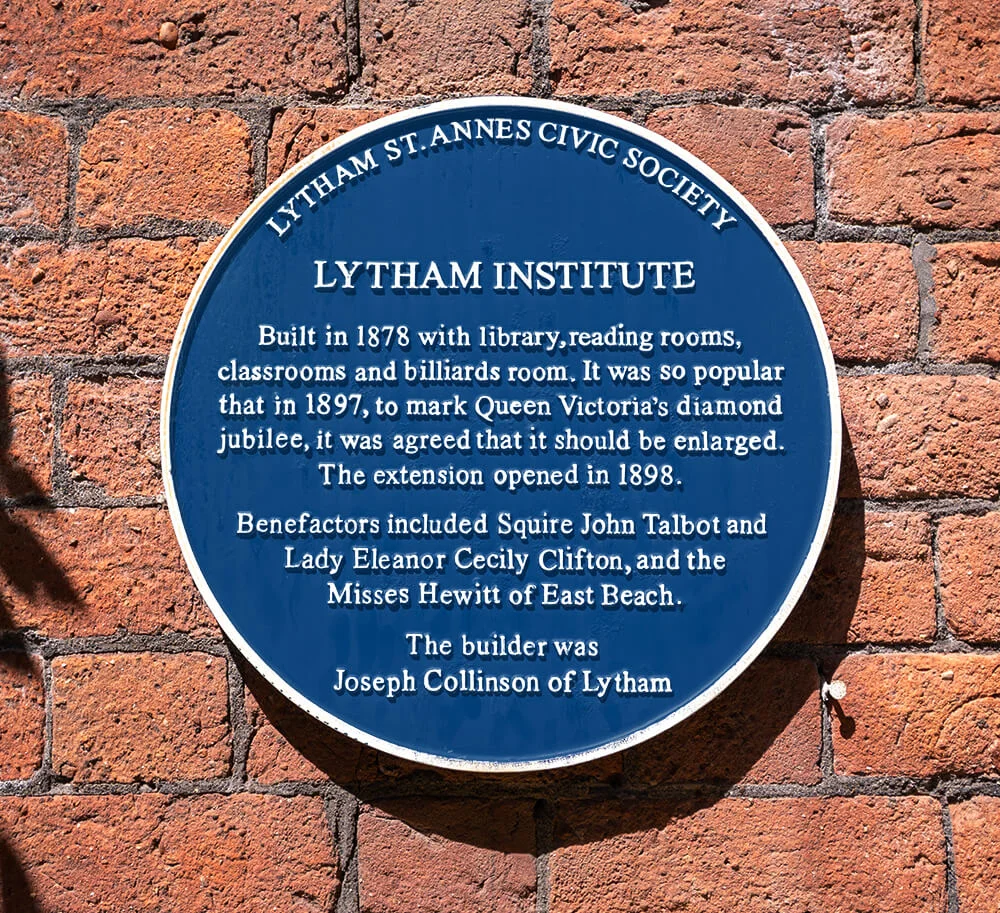
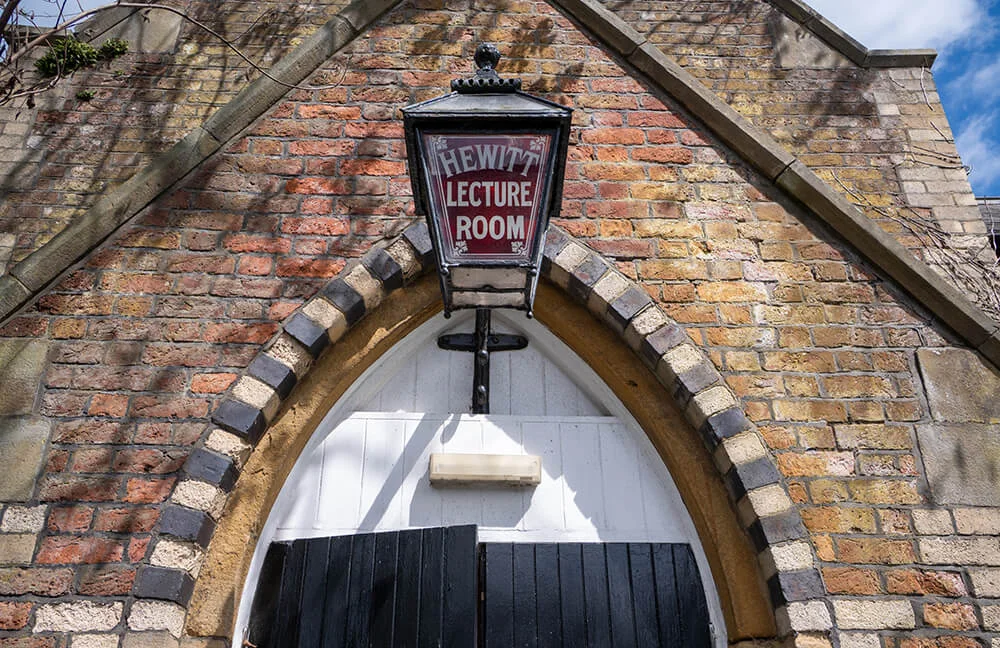
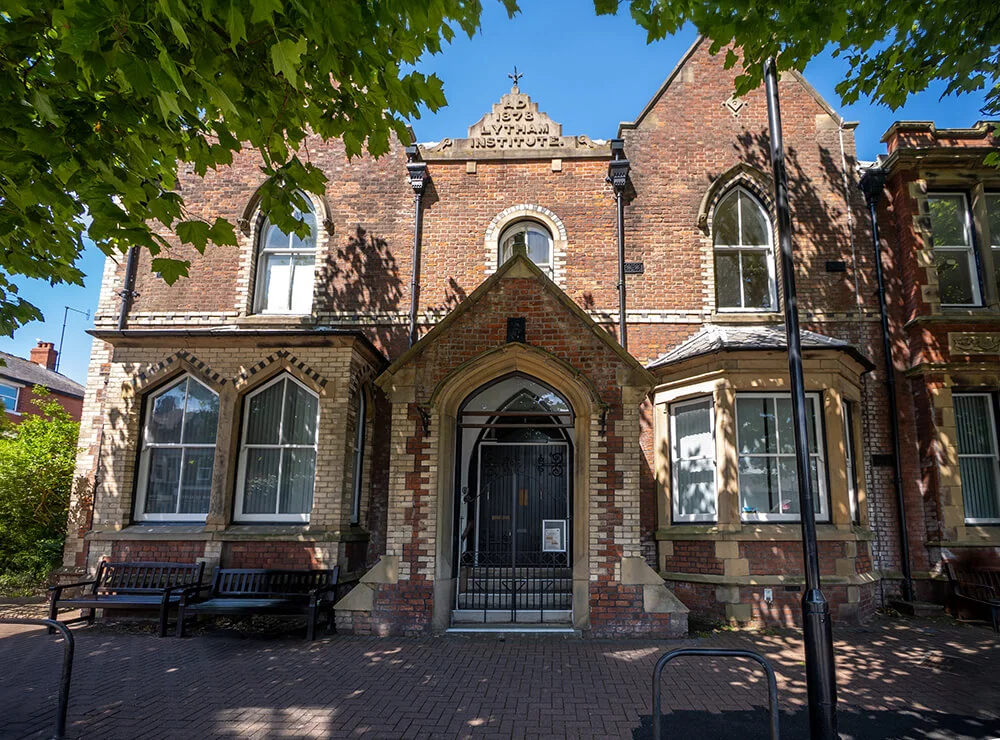
Lytham Library, originally built as the Lytham Mechanics’ Institute, has been a cornerstone of learning and community life since it first opened on 30 August 1878. The idea for the Institute came about following a public meeting at the Assembly Rooms in October 1876, chaired by the Reverend Henry Beauchamp Hawkins of St Cuthbert’s Church, to discuss the creation of a place “where young men of Lytham could meet for social intercourse, and to read and think.” Fundraising quickly followed, with major donations from Lady Eleanor Cecily Clifton of Lytham Hall (£300) and the Misses Hewitt of Lytham (£1,000), whose generosity is still remembered in the name of the Hewitt Lecture Room. The site was donated by John Talbot Clifton, Squire of Lytham Hall.
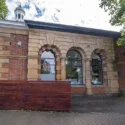
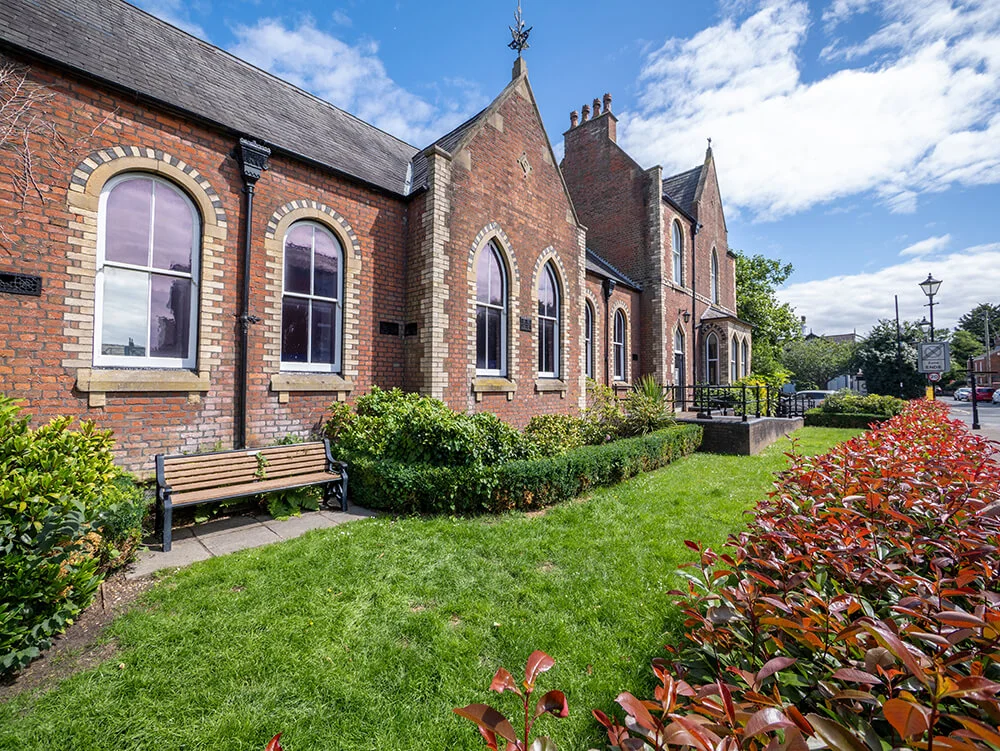
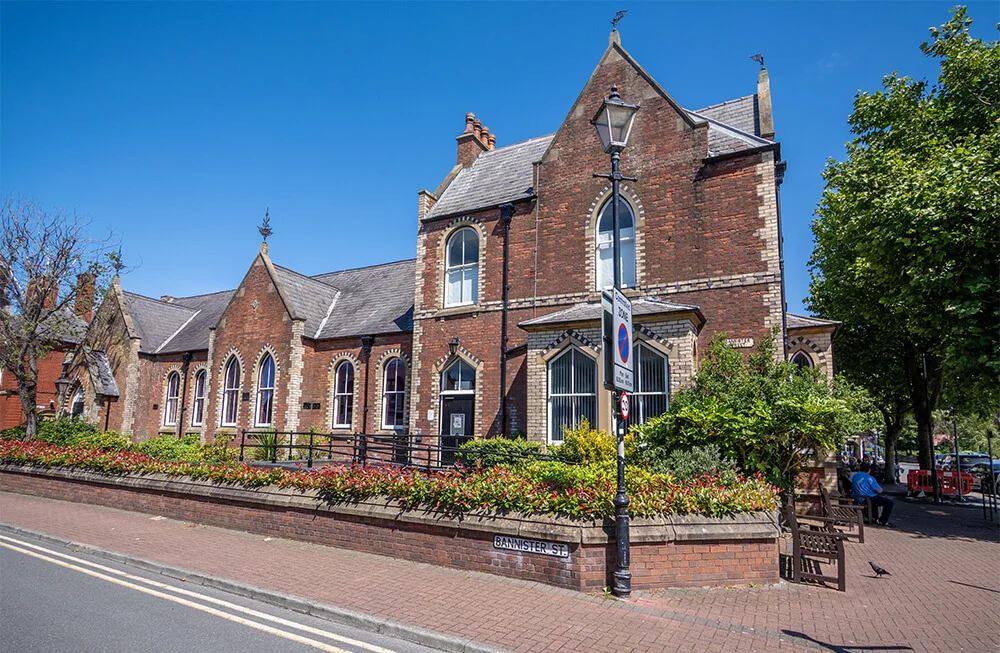
The building was designed and constructed by John Collinson of Lytham in a striking Gothic Revival style, built from dark red brick with yellow and black brick dressings, steep coped gables, and tall lancet windows. The project cost around £3,000 to complete. The Institute was formally opened by the Right Honourable George Cavendish Bentinck, MP, with a ceremony attended by civic leaders and clergy, including the Bishop of Manchester. At the event, social reformer Hodgson Pratt spoke about the importance of education in preparing working men for the responsibilities of democracy, at a time when universal suffrage was still decades away.
The Institute originally contained a small library, reading rooms, and lecture spaces. It served as a hub for education and recreation, particularly for men, reflecting Victorian values of self-improvement and social progress. The building was expanded in 1898 to mark Queen Victoria’s Diamond Jubilee. Designed by Thomas Grimble of Lytham and built by George Myers, the £1,500 extension added a gymnasium, a new reading room, and classrooms. The opening was presided over by the Duke of Norfolk on 8 January 1898.
By the early 20th century, the Mechanics’ Institute evolved into a public library. In 1922, following the merger of the Lytham and St Annes Urban District Councils to form the Municipal Borough of Lytham St Annes, the library came under municipal management. The 1929 Barrett’s Directory of Blackpool and the Fylde described it as “a neat Gothic building” with “billiard, reading, and lecture rooms and a library of 3,500 volumes.” Bertha Barrow served as Borough Librarian from 1906 to 1939, overseeing both Lytham and St Annes libraries.
In 1974, control of the library passed to Lancashire County Council as part of the local government reorganisation. It continued to serve as a public library and community space for decades, maintaining its character and distinctive architectural charm — noted by Pevsner for its “dark red and yellow and black brick dressings… steep coped gables with jaunty finials, and lancets.”
After 138 years of service, Lytham Library closed in September 2016 due to local government budget cuts, as part of a wider programme of library and museum closures by Lancashire County Council. The closure was met with local opposition, marking the end of an institution that had, since Victorian times, embodied the town’s dedication to education, culture, and civic pride.
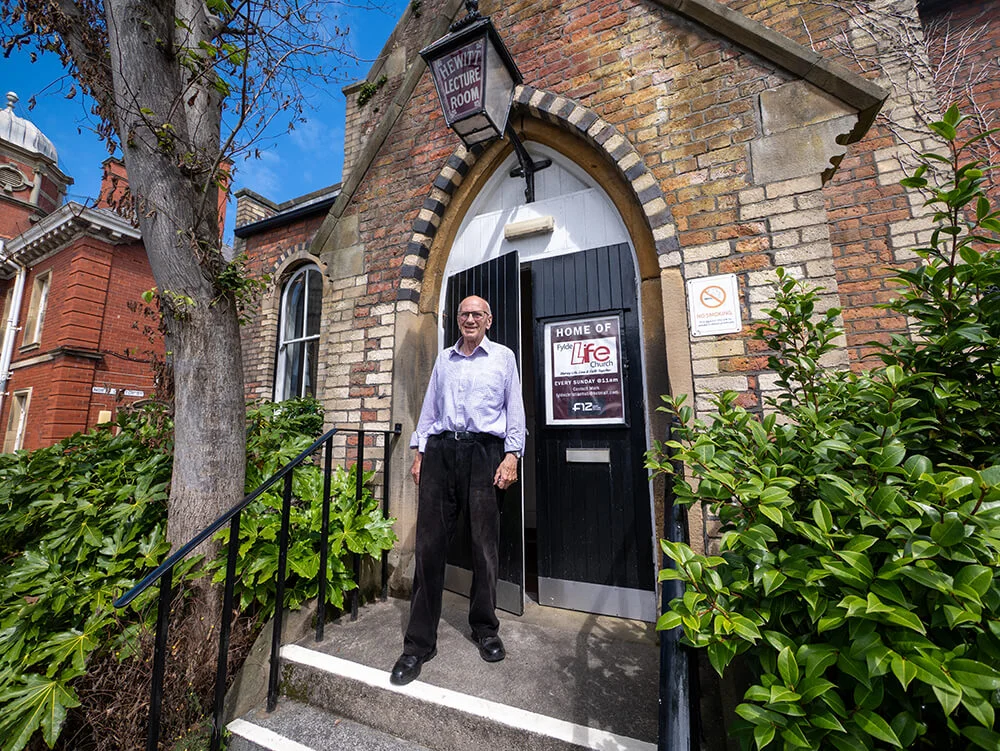
Robert Ratcliffe, Caretaker, June 2025
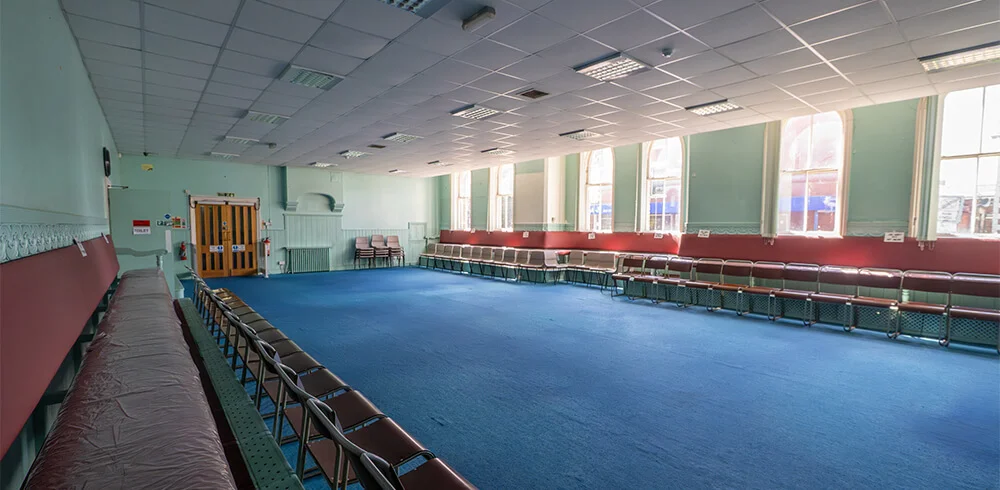
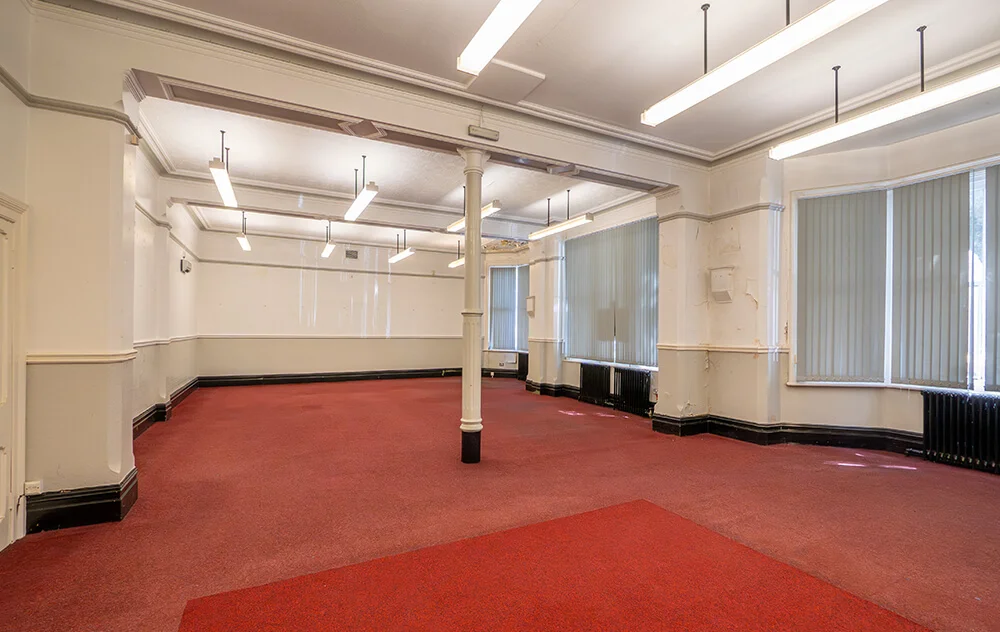
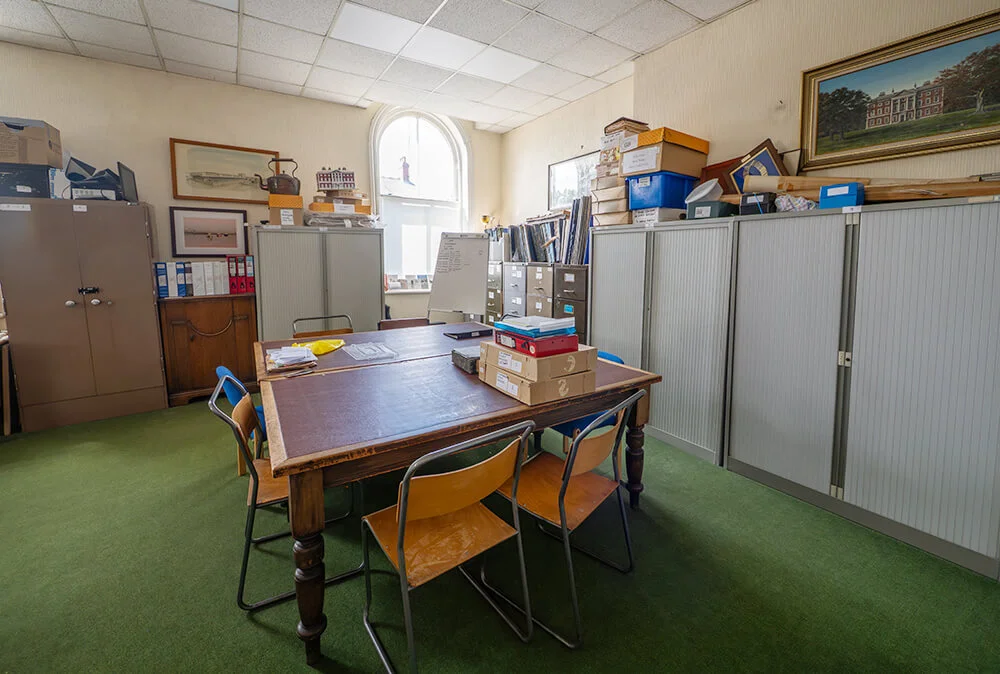
This room was once home to some snooker tables.
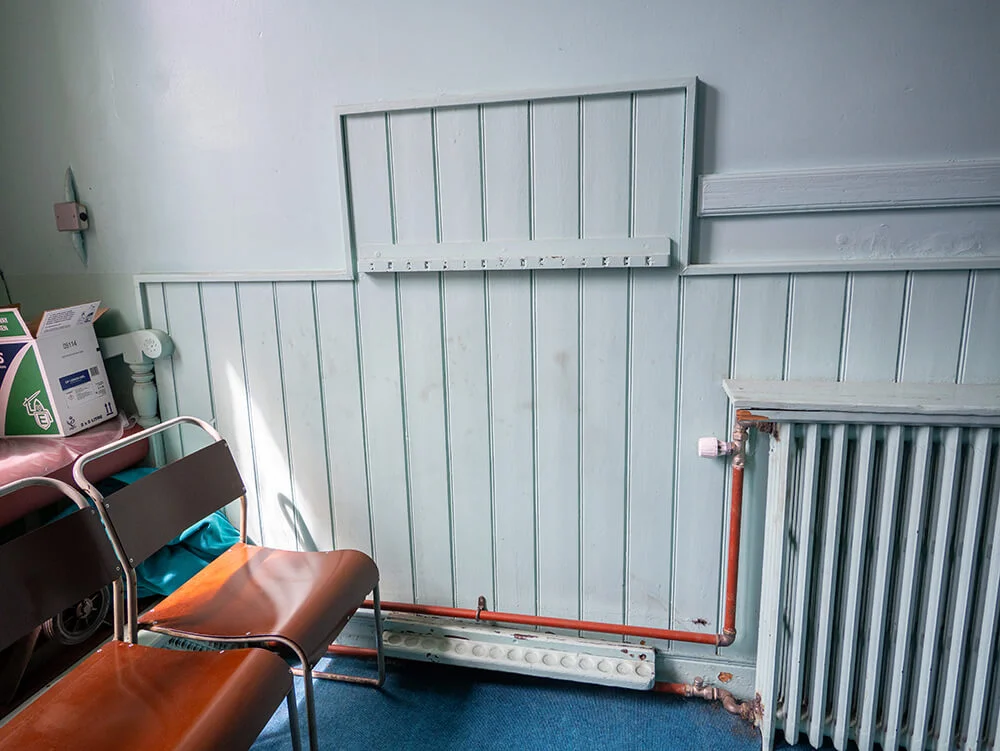
This snooker cue rack is evidence of how this room was once used.
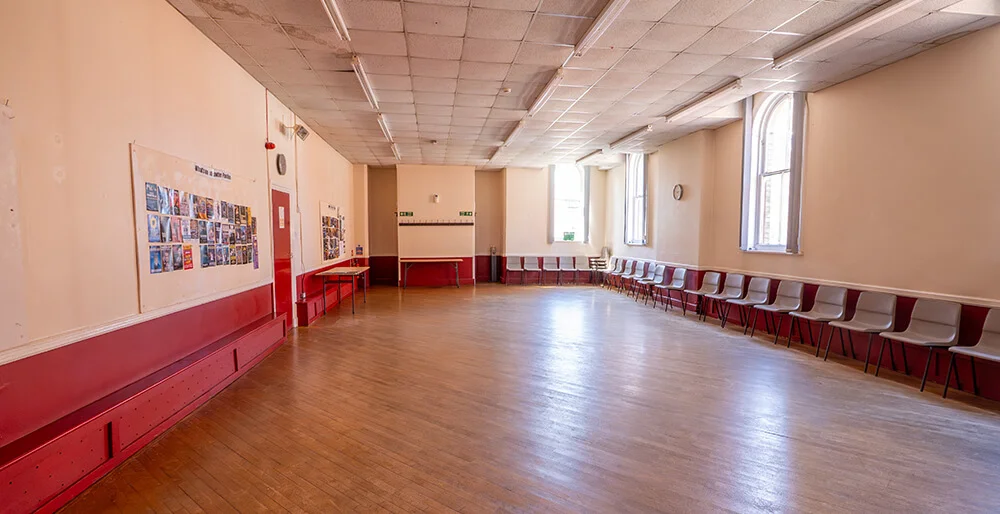
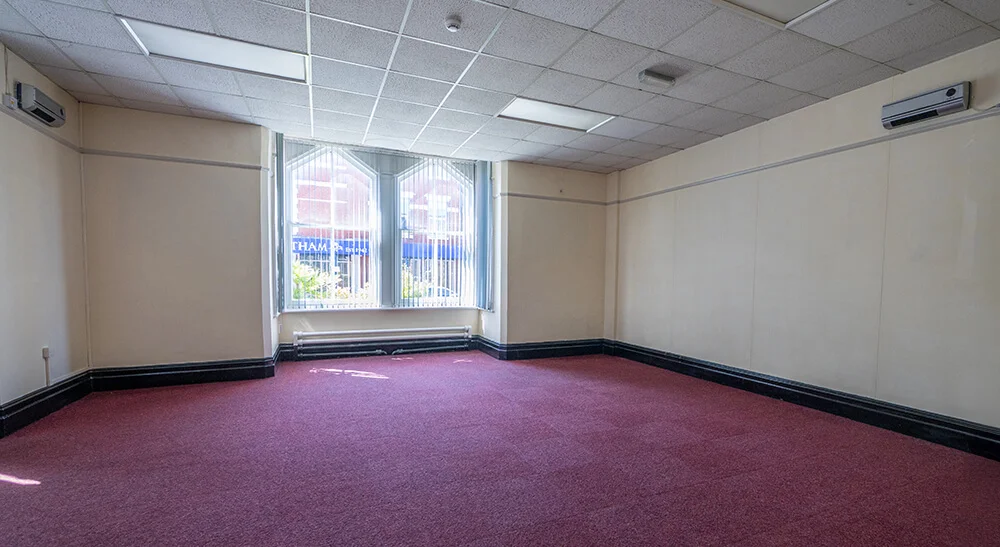
Images by © Deeper Blue Marketing & Design Ltd


