











































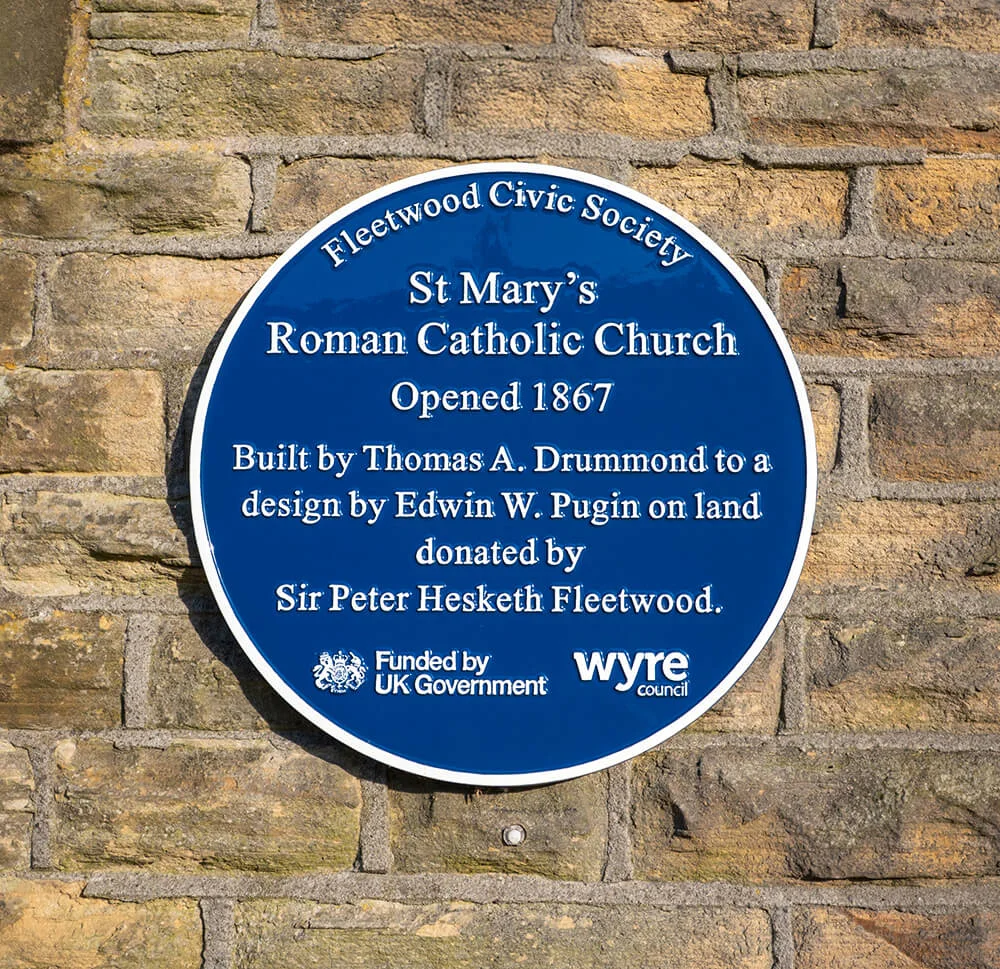
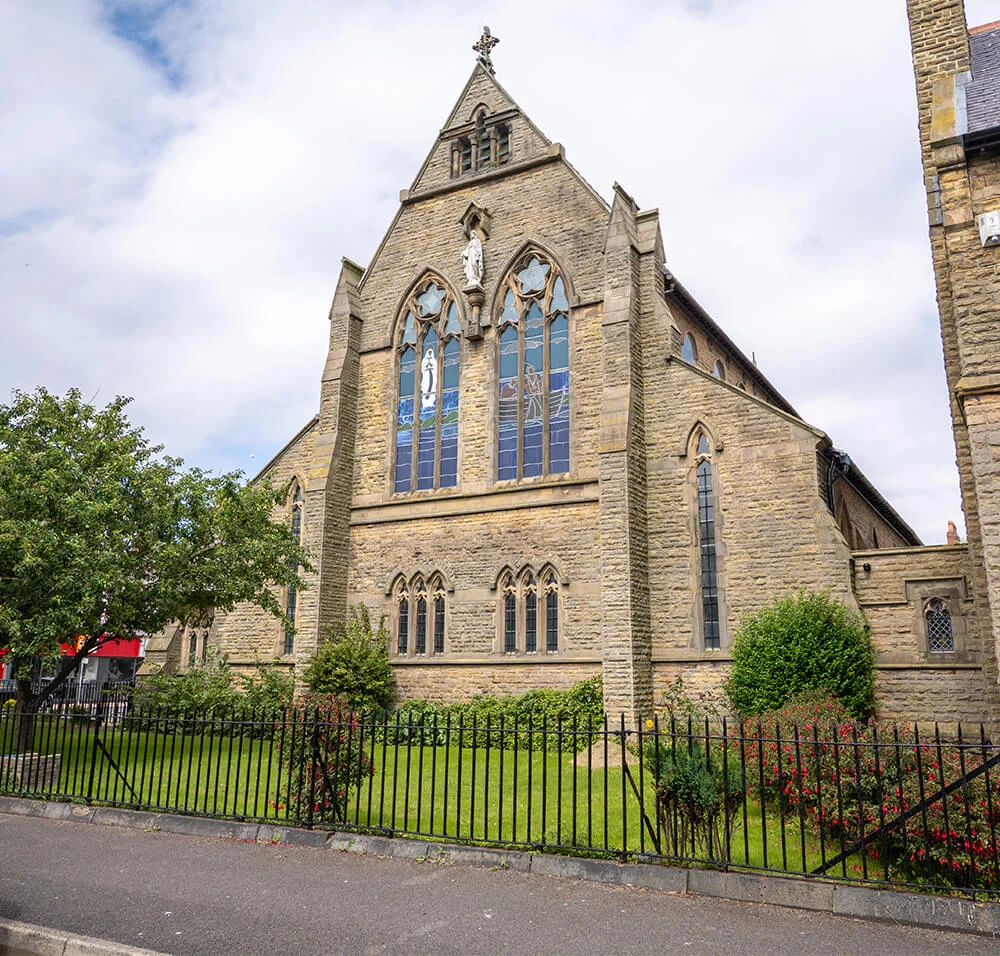
St Mary’s Roman Catholic Church in Fleetwood stands as a graceful example of Victorian faith and Gothic Revival architecture, its stonework rising quietly against the backdrop of sea air and salt-weathered rooftops. Designed by renowned architect Edward Welby Pugin, the church has been at the heart of Fleetwood’s Catholic community since the late 19th century, offering spiritual refuge and architectural distinction in equal measure.
Fleetwood itself was a planned town, conceived in the 1830s by Sir Peter Hesketh-Fleetwood as a model seaport and resort. As the settlement expanded, so did the need for new places of worship, reflecting the diverse faiths of its growing population. In response, construction of St Mary’s began in 1866 under local builder T. A. Drummond, with a total cost of £4,000 — around £447,000 in today’s money. The foundation stone was laid on 17 May 1866 by Bishop Alexander Goss of Liverpool, who returned to consecrate the completed church in November the following year.
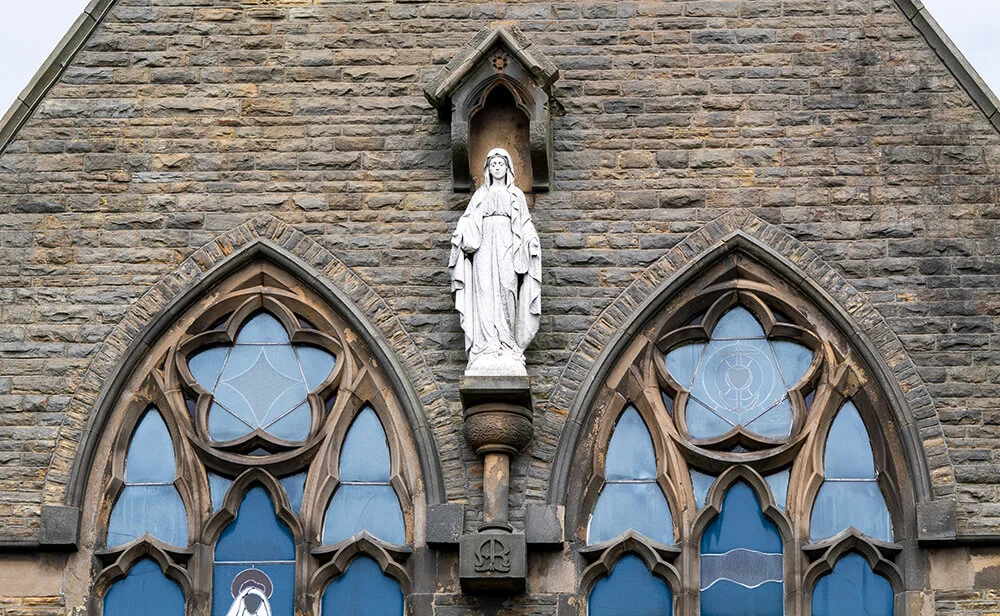
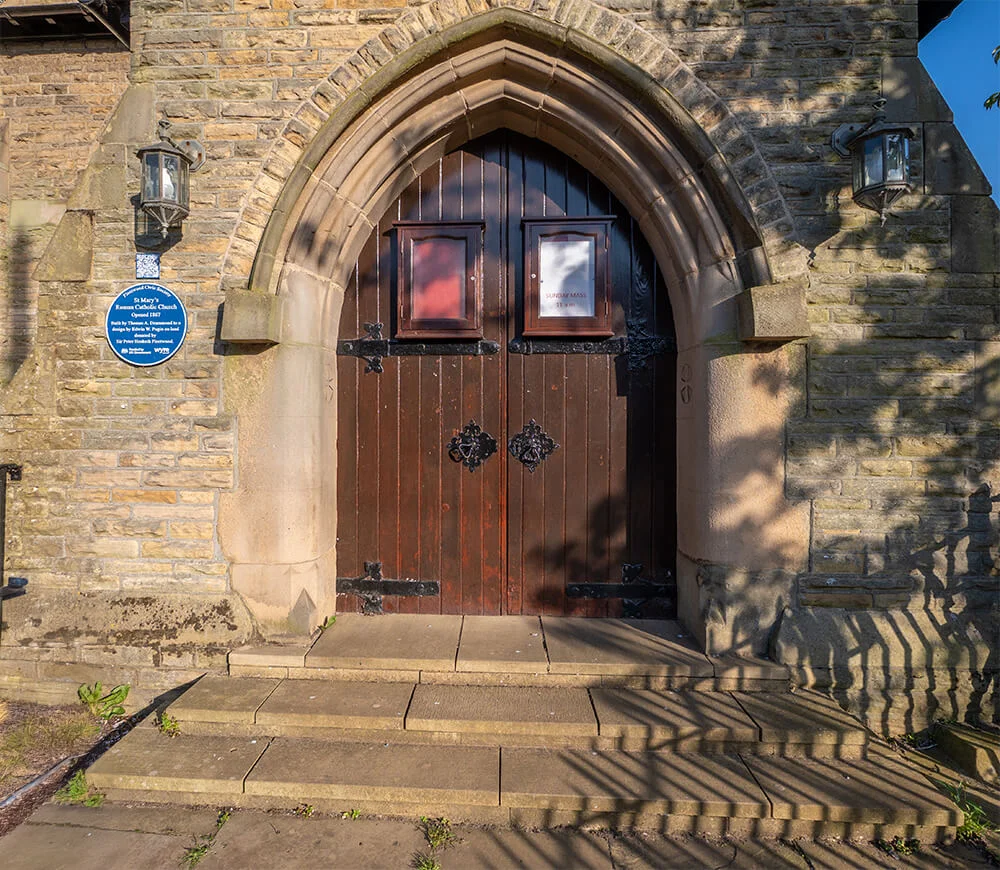
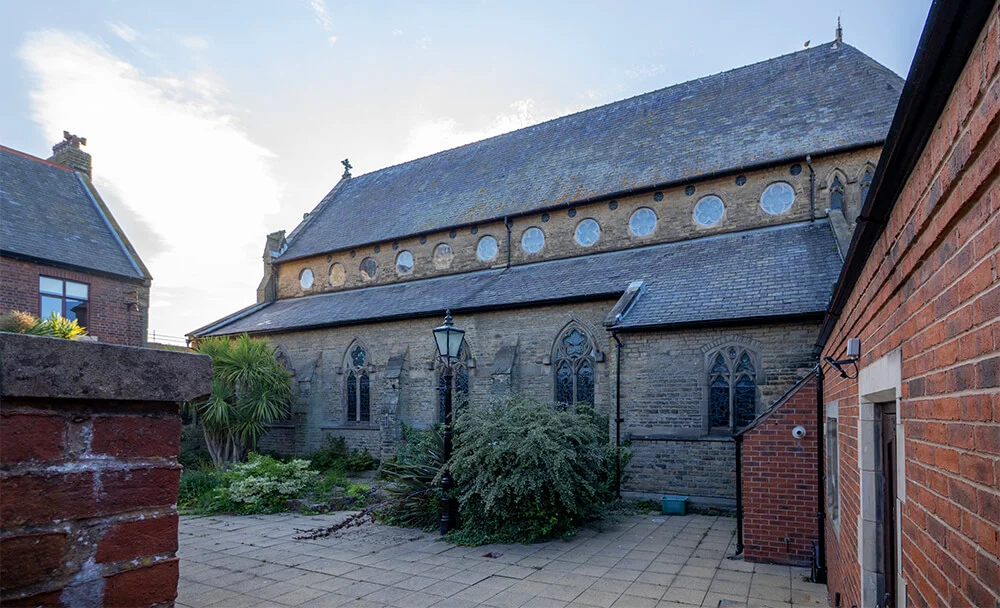
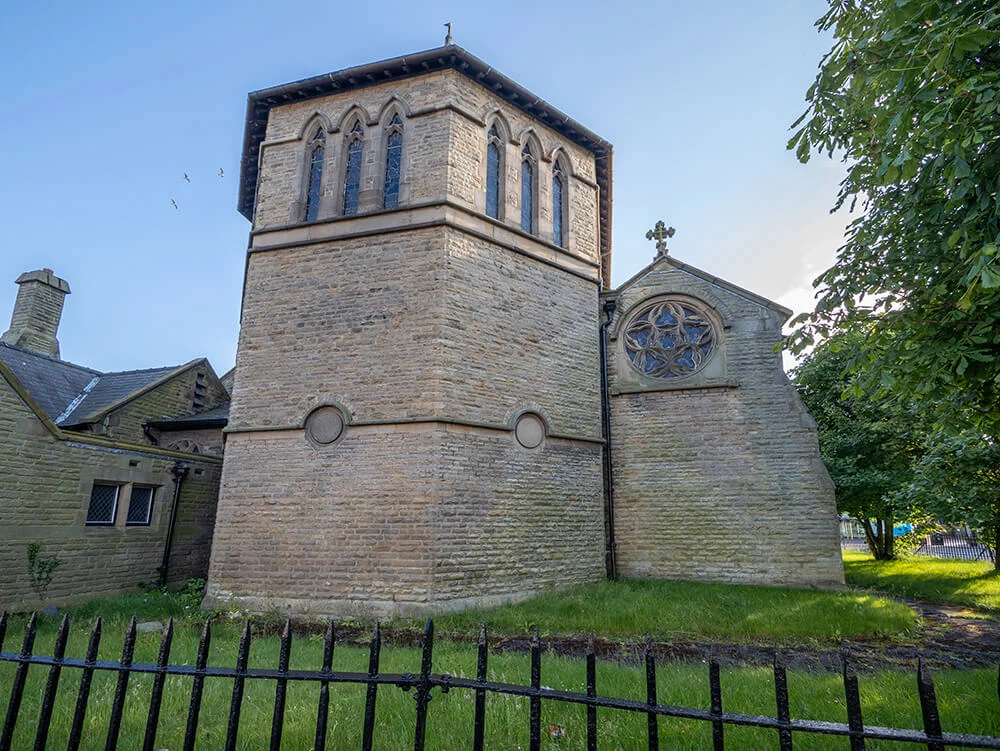
Although modest in scale compared with some of Pugin’s grander designs, St Mary’s displays his characteristic mastery of the Gothic Revival. Built of rock-faced stone with ashlar dressings and steeply pitched slate roofs, the church comprises a combined nave and chancel beneath one continuous roof, flanked by lower north and south aisles with lean-to roofs and ending in a polygonal apse. There is no tower, but the west front provides a striking focal point: twin three-light windows flanking a central niche containing a figure of Christ. The aisles are lit by slender two-light lancets capped with cinquefoils, while the clerestory is punctuated by quatrefoil oculi, filling the interior with soft natural light.
Designated a Grade II listed building in 1978, St Mary’s remains an active parish within the Roman Catholic Diocese of Lancaster. Beyond its architectural merit, it continues to serve as a living monument to Fleetwood’s faith and history — a place where Pugin’s vision, Victorian craftsmanship, and community devotion endure in harmony.
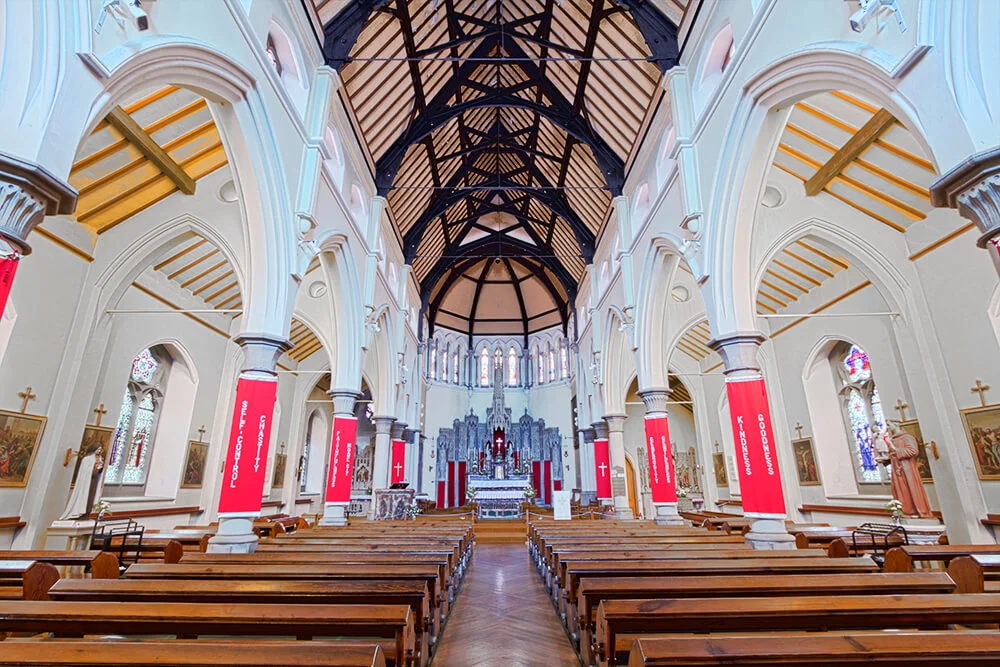
Colour edited to suit the post. Image by Mdbeckwith – CC BY 3.0
Text source: Wikipedia and ChatGPT
Images by © Deeper Blue Marketing & Design Ltd


