





































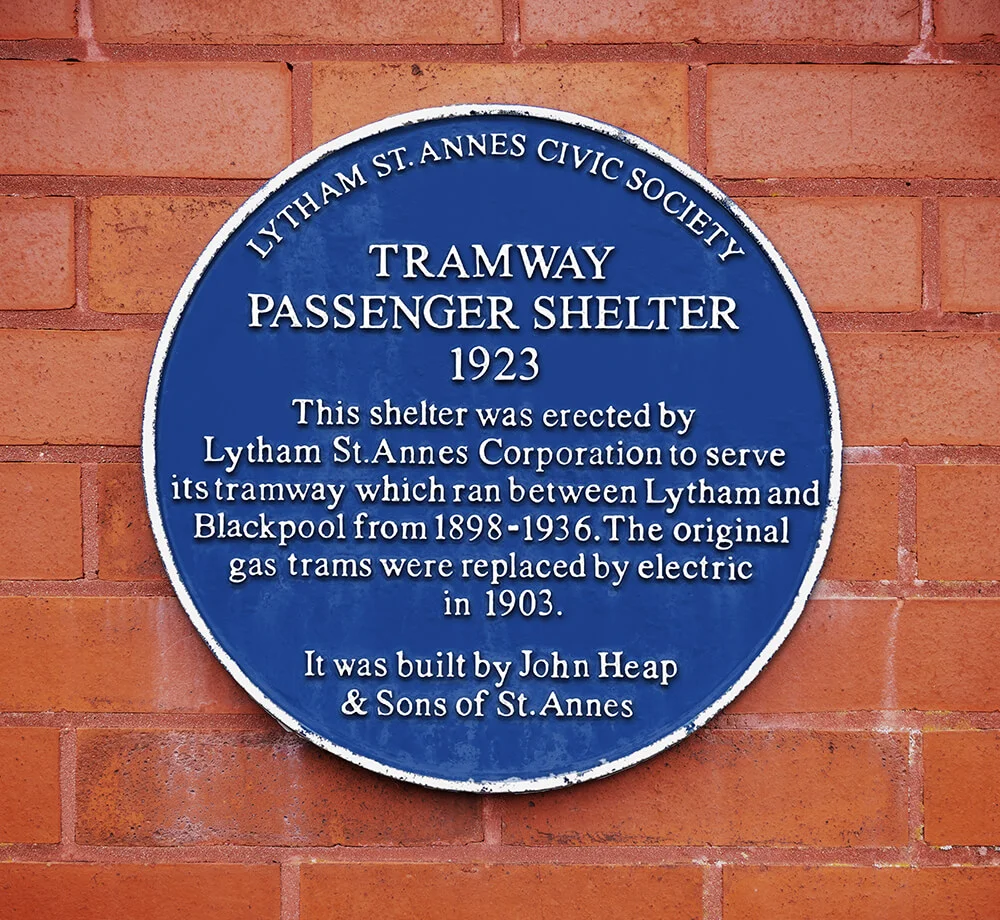
Tramway Shelter 23 in Lytham St Annes, built in 1923 by the local firm John Heap & Sons, stands as one of the last surviving physical reminders of the once-thriving tramway system that connected Lytham, St Annes, and Blackpool. Commissioned by the Lytham St Annes Borough Council shortly after it took control of the tram network, the shelter was constructed to provide passengers with a covered waiting area along the busy route that linked the coastal towns.
The tramway system itself had deep roots in the Fylde’s transport history. Originally launched in 1896 using compressed gas trams—an experimental but short-lived innovation—the service was electrified in 1903, greatly improving reliability and capacity. The line ran from Lytham Square through St Annes to Blackpool, serving both residents and visitors drawn to the expanding seaside resorts. By the 1920s, the tramway had become an integral part of daily life, prompting the construction of additional shelters like No. 23 to accommodate growing passenger numbers.
Following the closure of the tramway in 1936, as buses took over local transport, the shelter continued to serve as a bus stop waiting area for several decades. However, by the mid-1990s, road layout changes and new transport infrastructure rendered the shelter redundant. Its disuse could easily have led to demolition, but local heritage groups recognised its significance as one of the few remaining tram-related structures in the area.
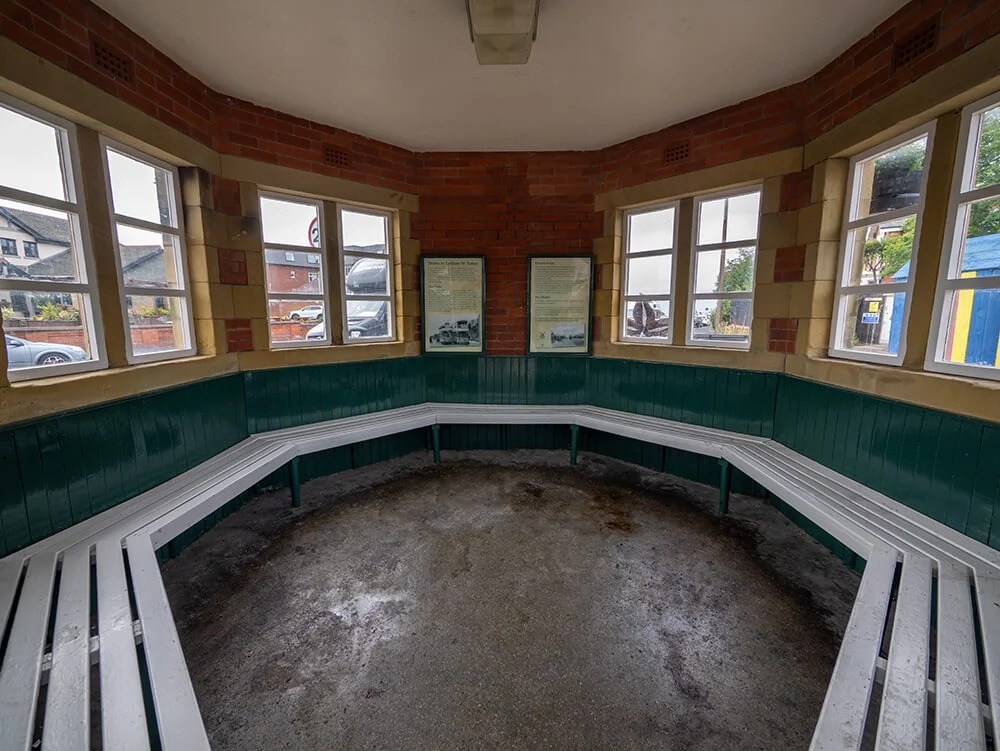
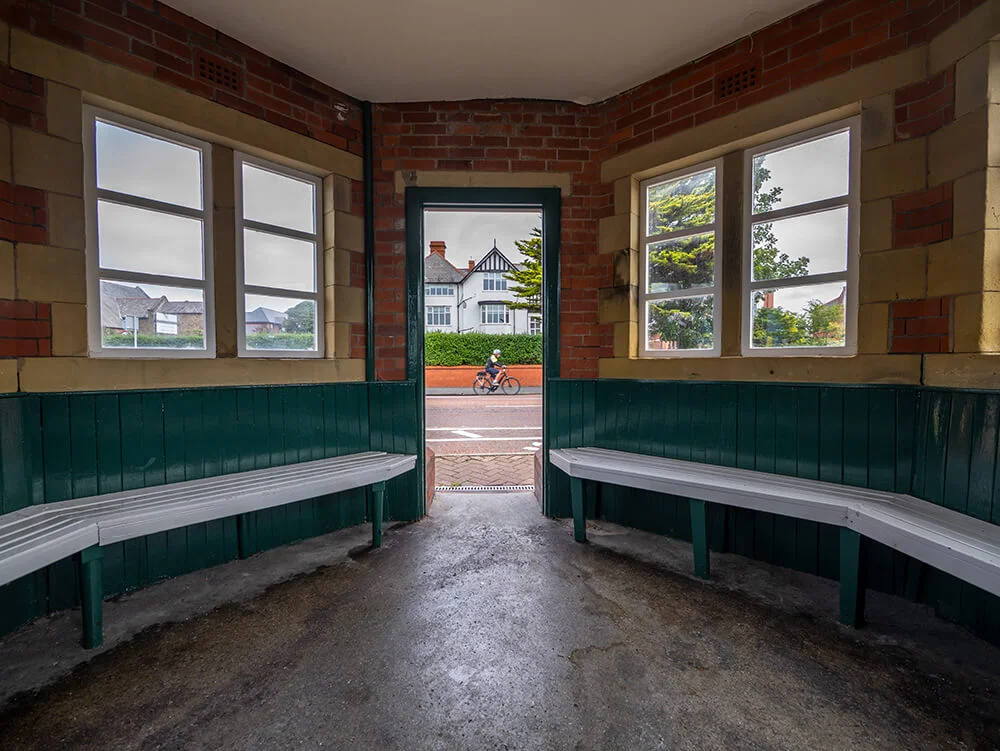
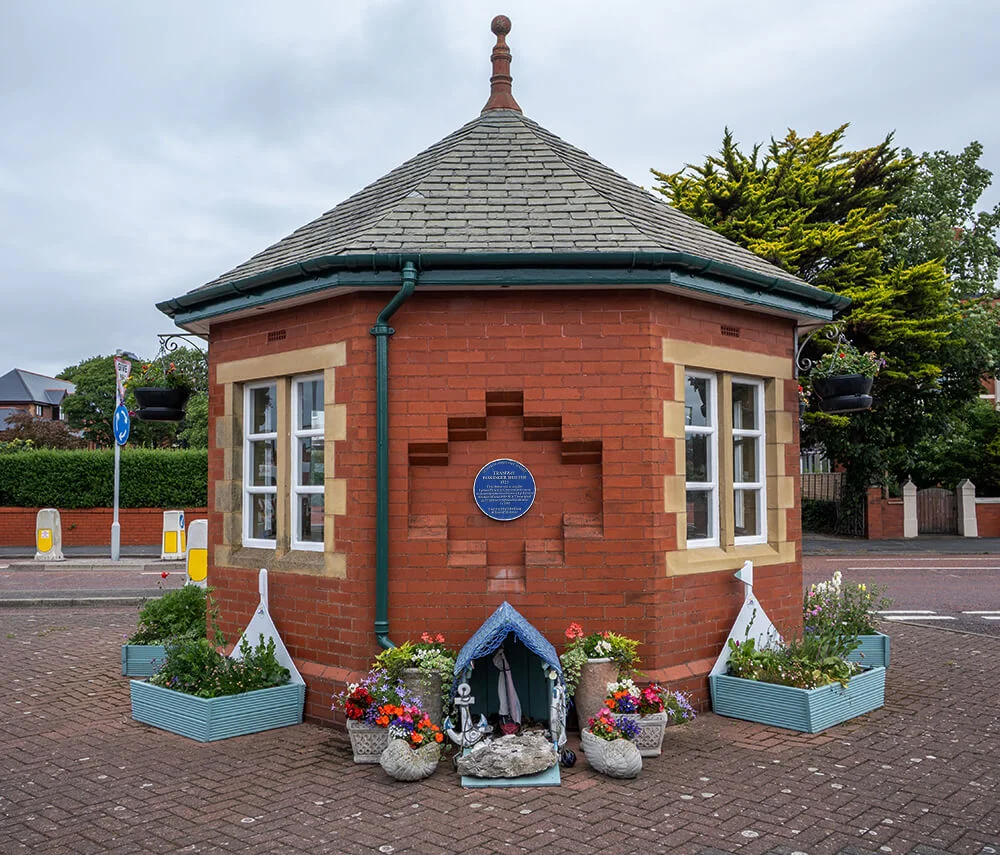
In 2009, Fylde Borough Council, in partnership with Lytham Civic Society, undertook a careful restoration of Tramway Shelter 23. The project aimed to preserve its historic character while repairing damage caused by time and weather. The shelter, built of red brick with a steeply pitched roof and crowned by a decorative ball finial, is octagonal in shape—a design chosen to provide shelter from all directions while maintaining an unobtrusive presence along Marine Drive. Unlike some of the larger and more ornate shelters found in St Annes, this one is simpler in style, reflecting the modest design typical of early 20th-century municipal architecture.
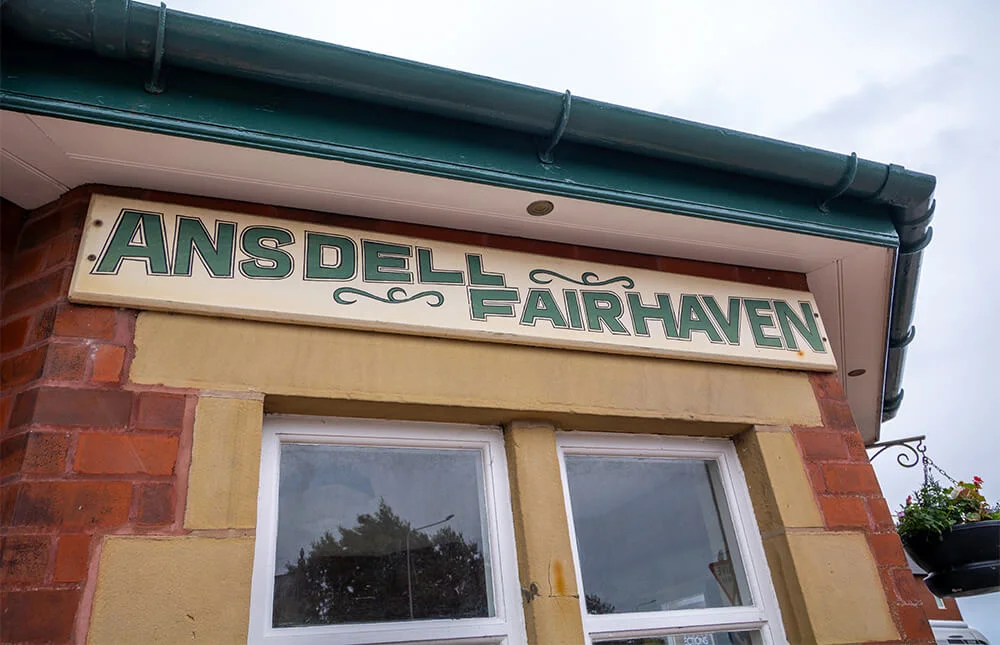
Today, Tramway Shelter 23 no longer serves a functional transport role, but it remains an enduring local landmark at the junction of Marine Drive and Clifton Drive South in Ansdell. Its preservation represents a tangible link to the early years of public transport in the Fylde Coast and stands as a tribute to the civic pride and craftsmanship that helped shape the region’s heritage.
Images by © Deeper Blue Marketing & Design Ltd


